

“$500 Million Superyacht of Russian Oligarch Alexei Mordashov Returns to Russia After EU Sanctions Hit His Assets”

A $500 million superyacht reportedly owned by Russian billionaire Alexei Mordashov has returned to Russian waters following sanctions imposed by the European Union. The 465-foot vessel, named Nord, docked in Vladivostok on March 31, 2022, just weeks after Mordashov was added to the EU sanctions list.
Mordashov, Russia’s third-richest individual with an estimated net worth of $22.5 billion, was sanctioned on February 28 for allegedly supporting actions that “undermine the territorial integrity, sovereignty, and independence of Ukraine.” The United Kingdom later followed suit, imposing its own sanctions. The measures include asset freezes and travel bans on the oligarch, who has denied involvement in the conflict.
Nord, delivered in 2021 by the German shipbuilder Lürssen and designed by Nuvolari Lenard, is among the most luxurious yachts in the world. It features a helicopter hangar, swimming pool, sauna, and cinema, and was awarded Yacht of the Year in its category at the 2021 World Yachts Trophies. The vessel flies under a Cayman Islands flag and reportedly costs up to $50 million annually to operate.
The yacht left the Seychelles on March 12, navigating across international waters before arriving in Vladivostok, located on Russia’s eastern coast along the Sea of Japan. The relocation comes amid a wave of Russian oligarchs moving yachts, private jets, and other assets to avoid Western seizure. Italy, for instance, has already confiscated a $71 million yacht and a $116 million property in Sardinia linked to Mordashov.
Mordashov has also been reshuffling his corporate holdings. On the day EU sanctions were imposed, he transferred nearly 30% of his 34% stake in the German travel company TUI to a British Virgin Islands entity believed to be controlled by his wife. He later stepped down as director of the mining company Nordgold, transferring control of a $1.1 billion stake to her as well.
The move of Nord back to Russian territory underscores the challenges of enforcing sanctions on ultra-wealthy individuals with complex international holdings. While Lürssen, the yachtmaker, declined to comment on ownership, Mordashov’s company Severstal has similarly remained silent.
Western nations have increasingly targeted Russian oligarchs in an effort to pressure President Vladimir Putin and weaken the Russian economy. Asset seizures and financial restrictions have become a key part of these sanctions, affecting high-profile yachts, private jets, and luxury real estate.
Nord’s arrival in Vladivostok demonstrates how sanctioned individuals can still maneuver their assets to secure safety and control. It also highlights the global scale of oligarch wealth and the lengths some will go to maintain access to expensive, mobile assets.
As enforcement efforts continue, authorities in Europe and North America face the challenge of tracking highly valuable assets, which often involve intricate ownership structures and international registrations. For now, Nord sits safely in Russian waters, a symbol of both wealth and the ongoing geopolitical tug-of-war surrounding sanctions enforcement.
THE CHIEF OF THE BORDER PATROL PRAISED THE AGENTS RESPONSIBLE FOR ALEX PRETTI’S D*ATH, SUGGESTING THEY WERE VICTIMS THEMSELVES.
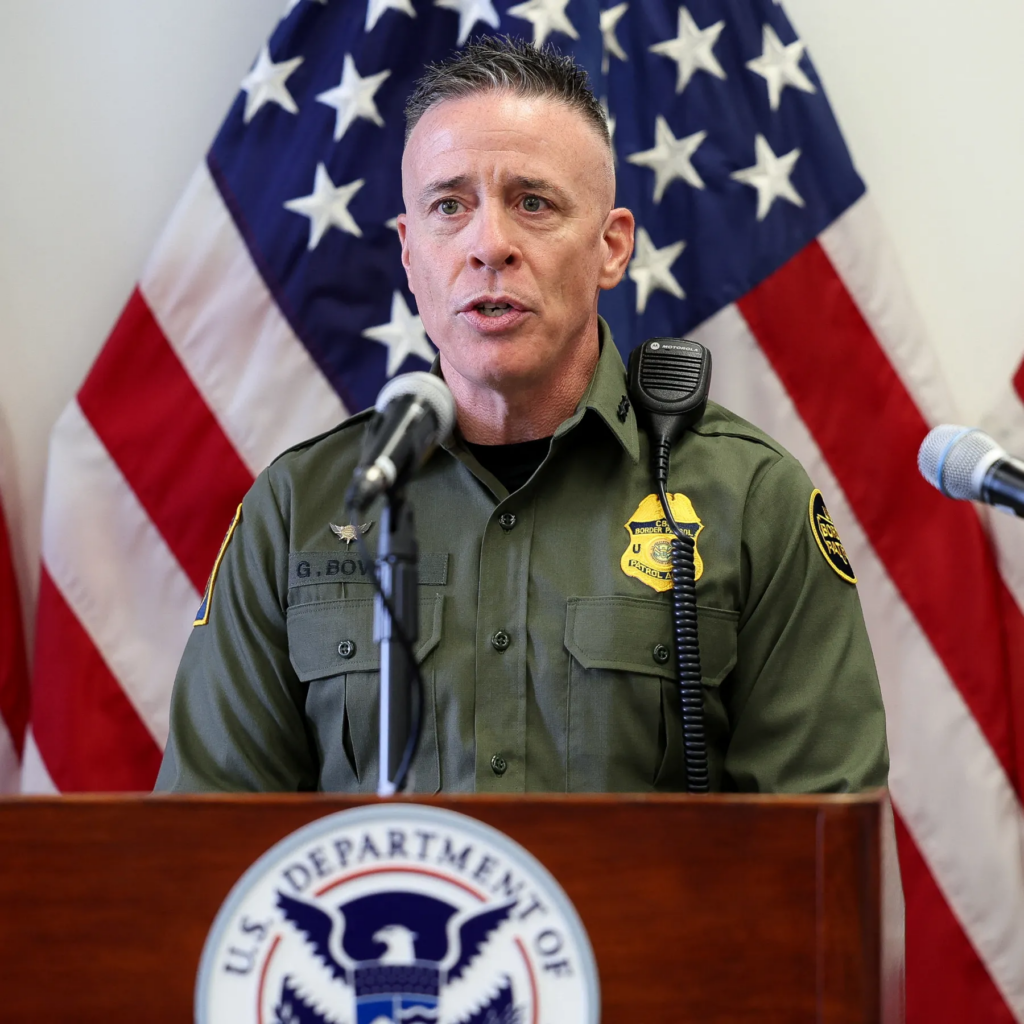
Border Patrol commander Gregory Bovino has publicly defended federal agents who shot and killed 37-year-old Alex Pretti in Minneapolis, a statement that has fueled significant outrage and intensified calls for independent investigations into the incident.
Pretti, a licensed ICU nurse and resident of Minneapolis, was fatally shot by federal agents on Jan. 24 amid an immigration enforcement operation that drew protests and widespread public attention. The Department of Homeland Security (DHS) initially claimed Pretti had approached agents armed with a handgun and posed a threat, but multiple videos, eyewitness accounts, and local officials dispute that narrative. Those videos show Pretti holding a phone, not a gun, at the moments before he was tackled, pepper-sprayed and shot.
On national television, Bovino, who rose to prominence under the current administration’s aggressive immigration enforcement strategy, praised the agents’ actions, saying their response prevented “specific shootings of law enforcement” and that they did “a good job” in taking Pretti down. He repeated assertions that Pretti “injected himself into” an active law enforcement scene and continued to imply that Pretti posed a threat, despite no clear evidence that he brandished a weapon at the time he was shot.
Critics have seized on the commander’s comments, arguing they reflect a troubling defense of federal use of force. Video footage appears to show an agent removing Pretti’s firearm from his waistband moments before the first shots were fired, and eyewitness accounts say Pretti was trying to help another protester, not attack officers. Government sources tell Congress that two federal agents fired their weapons in the encounter, but the footage doesn’t clearly show Pretti with a firearm during the shooting.
Local and state officials have sharply rejected the federal portrayal of events. Minnesota Gov. Tim Walz described the narrative used by DHS and Bovino as “nonsense,” saying video evidence contradicts claims that Pretti acted violently. Minneapolis Mayor Jacob Frey said videos showed officers aggressively attacking a constituent and that Pretti was recording events when agents engaged him.
The controversy has sparked protests, legal action, and heightened scrutiny of federal immigration enforcement. A federal judge granted a temporary restraining order to prevent the Department of Homeland Security from destroying or altering evidence related to the shooting, and Minnesota officials are pursuing legal avenues to halt ongoing federal operations they regard as unlawful.
Critics also say Bovino’s defense of agents and continued emphasis on an unverified federal narrative, even as body-camera and bystander footage contradicts claims, has eroded trust between local communities and federal law enforcement. They argue that a full, transparent investigation carried out by independent prosecutors and overseen by civil rights bodies is necessary to restore confidence.
The national backlash has reverberated in political circles as well. Lawmakers and advocacy groups are calling for accountability, with some demanding that DHS leaders resign or face hearings over the handling and early commentary on the Pretti shooting. Amid bipartisan unease, the situation continues to develop as federal, state, and local authorities grapple with the fallout
SCIENTISTS JUST CREATED A HYDROJEL BANDAID THAT CAN HEAL 90% OF WOUNDS IN 4 HOURS, HEALING THEM FULLY IN 24 HOURS.

In a groundbreaking scientific breakthrough, researchers from Aalto University in Finland and the University of Bayreuth in Germany have unveiled a self-healing “artificial skin” capable of fully repairing itself within 24 hours. This innovation could mark a transformative step in medicine, prosthetics, and soft robotics.
The newly developed hydrogel material mimics the appearance, texture, and flexibility of human skin. In laboratory tests, small cuts and slashes healed 80–90% of the material within just four hours, and the hydrogel regained 100% of its original strength and flexibility within 24 hours. Unlike conventional synthetic materials, the gel doesn’t simply patch over damage; it regenerates at the molecular level, leaving no scars or weak points behind.
Scientists attribute the hydrogel’s remarkable properties to its internal architecture. The material contains 10,000 ultra-thin clay nanosheet layers per millimeter, creating confined spaces that force surrounding polymer chains to densely entangle. When the gel is cut, these chains automatically move, twist, and re-bond, effectively “re-knitting” the structure without heat, glue, or additional chemicals.
“This is a major milestone for bio-inspired materials,” said Dr. Markus Schmidt, one of the lead researchers. “We can now design synthetic skin that behaves like living tissue, healing itself seamlessly.”
The potential applications are significant. In medicine, bandages and wound dressings could help severe burns and chronic injuries recover faster. Prosthetics could feature flexible, lifelike coverings that repair daily wear and tear. Soft robotics could benefit from machines capable of repairing their own outer layers without human intervention, improving durability and reducing maintenance.
Experts say that while the material is still in the research phase, the implications are profound. The ability for synthetic materials to repair themselves could change how we think about durability, safety, and human-machine interaction. “Imagine a world where your devices, bandages, and even artificial limbs quietly fix themselves overnight,” said Dr. Schmidt.
The breakthrough also highlights the role of nanotechnology in material science, showing how microscopic design can have visible, tangible effects. The gel’s self-healing properties rely entirely on the interplay of its polymer chains and clay nanosheets a sophisticated design that could inspire the next generation of bioengineered materials.
As of January 2026, researchers are exploring scaling the hydrogel for real-world applications, optimizing durability, and studying long-term performance. Public and scientific interest has been overwhelming, with engineers, doctors, and roboticists keenly following the progress.
This self-healing skin marks a moment of remarkable progress in science, demonstrating how smart design at the nanoscale can solve real-world problems. While widespread commercial applications may still be years away, the technology’s potential to revolutionize healthcare, robotics, and everyday life is undeniable.
PROPOSED NEW LAW WOULD REQUIRE COGNITIVE FITNESS TESTS FOR ELDERLY U.S. LAWMAKERS.

A heated debate over cognitive testing for U.S. lawmakers is gaining traction in Washington, sparking nationwide conversation about age, leadership, and transparency in government. As the median age of Congress reaches historic highs, questions about whether elected officials can fully perform their duties are increasingly front and center.
In mid-2025, Representative Marie Gluesenkamp Perez introduced an amendment proposing that the Office of Congressional Conduct design a standardized test to determine if members of Congress are free from “significant irreversible cognitive impairment.”
Although the House Appropriations Committee voted the amendment down, the proposal ignited discussions that have intensified into 2026. Prominent figures, including Nikki Haley, have continued advocating for mental competency tests for politicians over 75, citing concerns about the capacity of senior lawmakers to make complex decisions.
The debate took a national spotlight on January 6, 2026, when former President Donald Trump publicly called for mandatory cognitive exams for presidents and vice presidents. He claimed to have “aced” his third test, framing the conversation as one of public accountability.
While mandatory testing for elected officials has not yet been implemented, bipartisan measures like the ASAP Act and CHANGE Act are expanding cognitive screening during Medicare annual wellness visits, marking a significant step in prioritizing brain health for older Americans.
Proponents argue that standardized tests could provide voters with objective proof of their leaders’ mental fitness, ensuring that crucial decisions affecting millions of Americans are not made behind the scenes by staff or aides. “With so many members of Congress in their 70s and 80s, this is not about ageism, it’s about democracy and trust,” said one supporter.
Critics, however, caution against the potential misuse of cognitive testing. They argue that elections already function as a natural “fitness test” and worry that mandatory exams could fuel ageist narratives or be exploited politically to sideline experienced lawmakers. The question of whether such tests could be implemented fairly, scientifically, and without bias remains unresolved.
As 2026 continues, the discussion has prompted broader societal reflection about aging, capability, and leadership. How to balance the value of experience with the need for mental acuity is a complex dilemma, with implications for public confidence and governance.
Lawmakers, voters, and advocacy groups are watching closely, knowing that any formal system of cognitive testing could reshape the political landscape for decades to come.
This ongoing debate is not just about brain health, it is about defining the standards of leadership in a democracy that increasingly values transparency, accountability, and long-term trust in its institutions.
A WOMAN SPOTTED A MOVIE ACTRESS WHO LOOKED EXACTLY LIKE HER-THEN FOUND OUT THE ACTRESS WAS HER IDENTICAL TWIN SISTER, SEPARATED AT BIRTH.

In a remarkable story that feels almost cinematic, Anaïs Bordier, a fashion student in London, discovered she had an identical twin living thousands of miles away in Los Angeles. The revelation began in 2012 when a friend sent her a YouTube video featuring an American actress. As soon as the clip played, Anaïs froze. The girl on screen mirrored her face, her expressions, and even her smile.
Adopted from South Korea and raised in France, Anaïs had always believed she was an only child. But the striking resemblance prompted her to dig deeper. Her friends joined the search and soon tracked down the actress: Samantha Futerman, living in Los Angeles.
The similarities didn’t stop there. The women shared the same birthday November 19, 1987 and birthplace, Busan, South Korea. Like Anaïs, Samantha had also been adopted. Feeling a mix of disbelief and hope, Anaïs sent a Facebook message to Samantha, asking about her birthplace.
What started as a shy inquiry blossomed into a long Skype call that revealed a lifetime of parallel experiences. Their connection was confirmed with a DNA test overseen by twin researcher Dr. Nancy Segal, which proved that Anaïs and Samantha were indeed identical twins, separated as infants and adopted by different families across the world.
Since that extraordinary reunion, the sisters have embarked on a mission to reconnect with their past and help other adoptees. They created the documentary “Twinsters”, detailing their journey from shock to discovery. They also co-authored the book Separated @ Birth, and traveled back to South Korea to meet their foster mothers, learning more about the early circumstances that shaped their lives.
Their story has resonated with people worldwide, offering a powerful example of how technology and persistence can uncover deep personal truths. The twins now advocate for adoptees searching for their roots, sharing their experiences to inspire others to reconnect with lost family and explore their heritage.
The tale of Anaïs and Samantha underscores how fate, coincidence, and a single viral video can dramatically change the course of a life. From a bus in London to a city in California, a moment of recognition turned into a journey of discovery, family, and advocacy. Their story continues to touch hearts globally, reminding the world that even across continents and years, family ties can find a way to reunite.
Man Admits Killing, Dismembering His Pregnant Sister, Claiming She Was ‘No Longer Innocent.
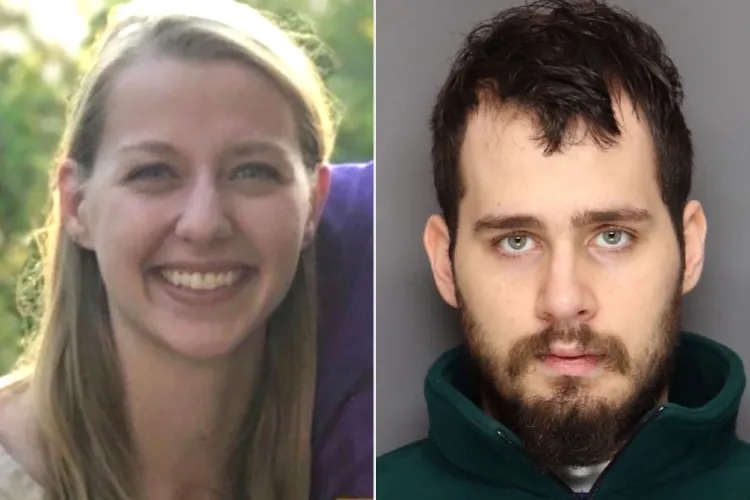
A Minnesota man has pleaded guilty to one of the most horrifying family murders in recent memory, admitting to killing and dismembering his pregnant sister, Bethany Ann Israel, after telling authorities he believed she was “no longer innocent.”
Jack Joseph Ball, 24, entered his guilty plea this month in Dakota County Court, admitting to premeditated first-degree murder of Israel and her unborn child. The state has said he could face life in prison if convicted. Ball’s trial regarding his mental illness defense is set for late May 2026, where the court will evaluate whether he was capable of understanding the nature of his crime at the time.
The shocking events unfolded in late May 2024. Bethany, reportedly 17–18 weeks pregnant, had dinner with her brother before disappearing. Family members alerted authorities when she failed to return home. Police discovered gruesome evidence at two locations, including bloody knives and dismembered body parts, and found Ball fleeing the scene with visible injuries, including a neck wound that appeared self-inflicted.
Investigators also uncovered journals in which Ball wrote that he wanted to kill his sister because she was “no longer innocent,” providing chilling insight into his motive. Dakota County Attorney Kathy Keena described the case as “deeply disturbing and horrific,” noting that the investigation revealed a crime that defies ordinary understanding.
Bethany Israel, remembered by family and friends as a cherished daughter, sister, wife, and expectant mother, left a lasting impact on her community. Her family established a GoFundMe in her memory, describing her as a woman whose “radiant spirit and unwavering kindness touched the lives of all who had the privilege of knowing her.”
Ball remains in Dakota County Jail pending his trial. He has asserted a mental illness defense, which could influence sentencing if the court finds he was not fully responsible for his actions. Minnesota law allows for a finding of no criminal responsibility if a mental illness prevented a person from understanding their actions or distinguishing right from wrong.
As the community grapples with the enormity of the crime, legal authorities and family members continue to emphasize the importance of a full trial to ensure justice for Bethany and her unborn child. If convicted, Ball will face a mandatory life sentence, a reflection of the severity and premeditation of his actions.
This case has drawn national attention due to the gruesome nature of the crime, the involvement of an unborn child, and the disturbing motivation cited by the perpetrator. It stands as a grim reminder of the complexities of mental illness in violent crimes and the profound impact on families and communities left behind.
“Woman Stabbed 34 Times in D.C. Hotel While Visiting for Concert Killer Sentenced to 40 Years in Brutal, Random Attack”

A Virginia woman traveling to Washington, D.C., for a concert was brutally stabbed 34 times in her hotel room in March 2023, a case that ended last week with the sentencing of her attacker.
George Sydnor, 46, was handed a 40-year prison sentence on Friday, January 16, following his guilty plea to first-degree murder while armed. His sentence will be followed by five years of supervised release, the U.S. Department of Justice reported. Sydnor had been on release for a previous attempted robbery at the time of the attack.
The victim, Christy Bautista, 31, from Harrisonburg, Virginia, had checked into her ground-floor Ivy City Hotel room in Northeast D.C. on March 31, 2023, to attend a concert. Surveillance footage and witness accounts revealed that Sydnor arrived on a rideshare bike, watched the area near her room, and then entered her room, slamming the door behind him.
Once inside, prosecutors said, he stabbed Bautista repeatedly in her neck and back. Officers responding to the scene found Sydnor sitting on the bed, smoking a cigarette, with blood on his hands, while Bautista lay dead on the floor. Surveillance captured the attack’s horrific sounds, and witnesses heard her screaming for help.
Prosecutors described the attack as sadistic and random, underscoring the terrifying nature of the crime. In court, Sydnor offered a brief apology, claiming he “never intended for none of this to happen and I’m terribly sorry,” while his attorneys argued that his declining health and remorse should reduce his sentence. The judge rejected these claims, emphasizing the brutality and premeditation of the act.
Bautista’s family described their heartbreak publicly. Her sister Emily Bautista noted the randomness of the murder was particularly devastating, saying, “She had all the right precautions, and she still was killed randomly.” Another sister, Ashley Bautista, added, “I feel a humongous hole in our heart never being able to talk to her again, to love her and to hug her. I miss her so much.”
Christy was remembered as a bright and inspiring young woman. A GoFundMe campaign in her memory called her “a shining light that lifted up everyone’s spirits around her” and emphasized her encouragement of others to face challenges with courage.
The case also raised concerns about security for ground-level hotel rooms and the dangers of random attacks on travelers. Authorities continue to highlight the importance of vigilance, though the unpredictability of crimes like this makes prevention difficult.
Sydnor’s sentencing marks the conclusion of a case that shocked the D.C. community and highlighted the vulnerability of unsuspecting individuals in public spaces. Bautista’s family and friends continue to mourn, while her life and spirit are celebrated as an enduring legacy.
“Struggling Child Gets Life-Saving Kidney from Nurse Who Once Cared for Her, Turning a Year of Waiting into a Miraculous Recovery”
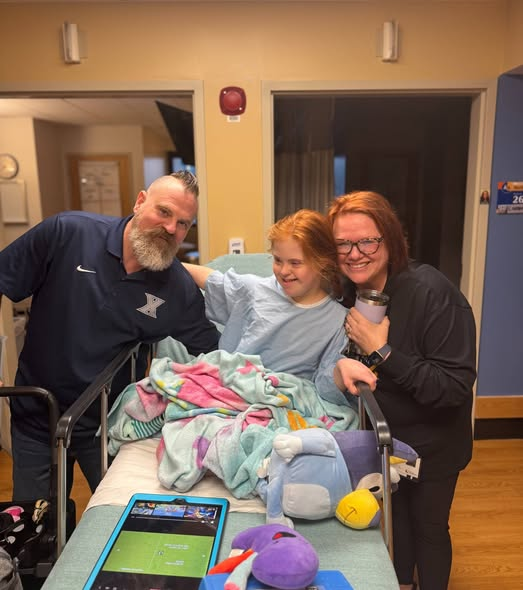
Caroline’s health journey began with an unforeseen and challenging kidney condition that left her family searching desperately for a solution. For nearly a year, her parents hoped a family member could be a match, only to face the heartbreaking reality that none were suitable donors.
After months of uncertainty, hope arrived from an unexpected source: Morgan, a nurse at Cincinnati Children’s Hospital. Morgan had likely cared for Caroline in her earliest days in the NICU, and by a remarkable twist of fate, she turned out to be a perfect match. The connection between the two families made the donation all the more meaningful.
Morgan’s selfless act of kindness gave Caroline a new kidney and a renewed chance at life. The transplant surgery was successful, and the family faced the long recovery with cautious optimism. Caroline tackled her post-transplant challenges with determination, and every milestone, no matter how small, became a moment of celebration.
After her recovery, Caroline’s energy returned, and she quickly resumed her normal routine. Her first day back at school marked a triumphant moment not just for her, but for her family and all those who supported her during the difficult journey. The transplant had given Caroline a second chance to live fully, inspiring everyone around her with her resilience.
Caroline’s story also highlights the power of community and generosity. Morgan’s decision to donate her kidney reminds us of the extraordinary impact one person can have on another’s life. Acts of kindness like this can transform despair into hope and create connections that last a lifetime.
Today, Caroline thrives with newfound energy and enthusiasm. Her journey serves as a beacon for other families facing similar medical challenges, showing that with support, perseverance, and compassion, even the most daunting obstacles can be overcome.
Caroline’s transformation is not just about surviving; it’s about reclaiming her life. She is now healthier than ever, embracing each day with gratitude and joy. Her story is a testament to the profound difference that generosity, skill, and human connection can make, proving that miracles can come from unexpected places.
As Caroline continues to grow, her family remains grateful to Morgan and everyone who supported them. With a bright future ahead, Caroline stands as living proof of the life-changing power of kindness.


Leave a Comment