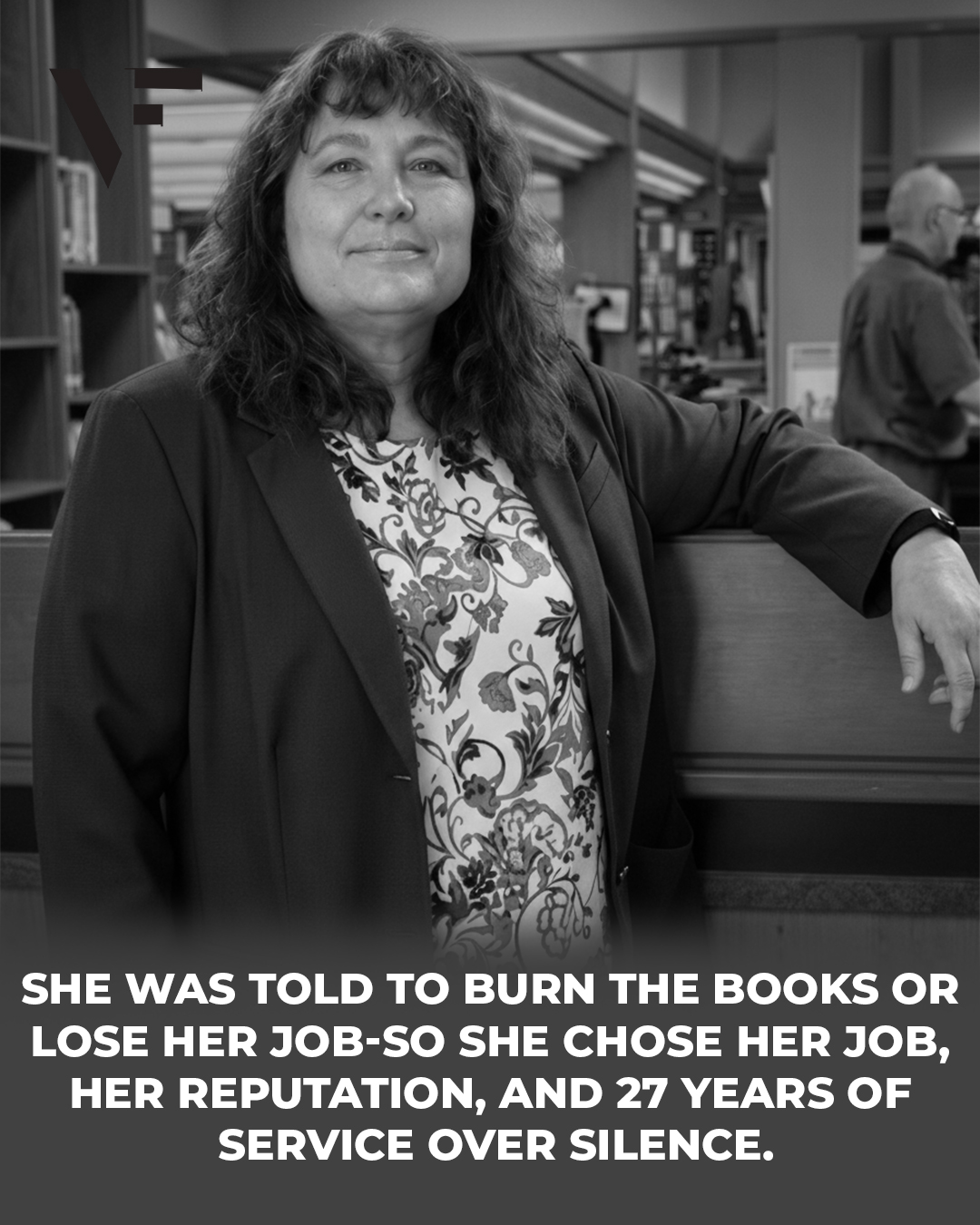

In July 2023, after 27 years at the Campbell County Public Library in Wyoming, Terri Lesley was fired by a newly appointed board. Her offense was refusing to remove books challenged after a Pride Month post sparked complaints from a small group of residents. Dozens of titles were targeted and she was reported to law enforcement, but a prosecutor found nothing illegal. As political pressure mounted, board members were replaced and the vote became inevitable. Terri chose professional ethics over silence. Her dismissal became part of a wider national debate over censorship, public libraries, and who gets to decide what stories remain on the shelf.
desc ;
In July 2023, after nearly three decades of service, Terri Lesley stood before a packed meeting room in Gillette, Wyoming. The board members seated before her were preparing to vote on her future. Outside the building, residents gathered with signs and statements. Inside, the discussion centered not on budgets or programming, but on books.
Lesley had worked at the Campbell County Public Library for twenty seven years, serving eleven of those as executive director. In June 2021, during Pride Month, the library’s social media account acknowledged titles in its collection related to LGBTQ themes. The post prompted a formal response from a small group of residents who objected to certain books available to minors.
Seventeen individuals filed fifty seven challenges against twenty nine titles. They alleged that the books were obscene and inappropriate for public access. Some called for criminal investigation. The Campbell County Sheriff’s Office referred the matter to a special prosecutor, who reviewed the materials under Wyoming’s legal standards for obscenity. The prosecutor concluded that the books did not meet the legal definition of obscene and did not warrant prosecution.
The controversy did not subside. Library governance in Wyoming rests with appointed boards, and in the months that followed, county commissioners replaced several board members. By 2023, four of the five positions on the library board had new appointees. Public debate intensified over the role of libraries in providing access to contested materials.
Lesley maintained that collection decisions were guided by established policies and professional standards. Public libraries in the United States operate under principles shaped by constitutional interpretation and professional guidelines, including those promoted by the American Library Association. These principles emphasize access to a broad range of viewpoints and resist removal based solely on political or ideological objection.
At the July 2023 meeting, after extended public comment, the board voted four to one to terminate Lesley’s employment. Supporters in attendance argued that she had followed policy and defended intellectual freedom. Critics maintained that leadership required different decisions regarding certain materials. The vote reflected a broader national debate over book challenges in public schools and libraries.
Lesley’s dismissal drew attention beyond Wyoming, as similar disputes unfolded across the country. Advocacy groups on different sides of the issue cited the case as evidence of either necessary reform or censorship. The legal status of the books themselves did not change; they had already been determined not to be obscene under state law. The issue instead centered on governance and policy authority.
For Lesley, the outcome marked the end of a career rooted in local service. For the community, it underscored how public institutions can become arenas for cultural conflict. Libraries have long balanced competing expectations, serving children, parents, researchers, and casual readers within a shared civic space.
The meeting in Gillette did not resolve the larger debate over access, parental concern, and public funding. It did demonstrate how quickly questions about books can reshape careers and institutions. In the quiet order of library stacks, decisions about inclusion and removal carry consequences beyond the shelves.


Leave a Comment