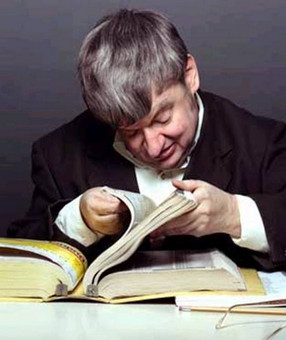

Born without a corpus callosum, Kim Peek was predicted to never walk, talk, or function. Doctors advised institutionalization but his father said no. Kim’s brain, though “different,” memorized 12,000 books, dates, facts, and details with perfect recall. Limited physically and socially, he relied on his father while inspiring the world with his extraordinary mind. Barry Morrow’s Rain Man brought Kim’s story to global attention, highlighting his genius and warmth. When he died at 58, he left a legacy that proved difference is not limitation, love is transformative, and the human mind and spirit can exceed every expectation.
November 11, 1951. Salt Lake City, Utah.
When Kim Peek was born, doctors examined his unusually large skull and delivered a verdict that could have ended his life before it began. His corpus callosum the bridge between the brain’s hemispheres was entirely missing. Without it, they said, he would never walk, never talk, never function.
“Institutionalize him. Forget he exists,” they advised.
Fran Peek, his father, said one word: No.
Fran brought Kim home, refusing to accept a life written in medical doom. Slowly, impossibly, he discovered that Kim’s brain was not broken, it was different.
By age three, while other children learned letters and colors, Kim could recite books verbatim after a single reading. Every page, every sentence, every punctuation mark is stored in a mind that reads both pages simultaneously, left eye, right eye. Within hours, he retained the material forever.
Over his lifetime, Kim Peek memorized roughly 12,000 books: history, literature, geography, Shakespeare, the Bible, phone books, encyclopedias. Ask him a random date or ZIP code, and he would respond instantly with facts, context, and stories. His mind became a living database, faster and more accurate than any computer.
But genius came with cost. He could not tie his shoes or brush his teeth alone. Social cues baffled him. Metaphors and sarcasm made no sense. He needed his father for nearly everything.
Fran Peek dedicated decades to his son’s care. They lived quietly in Salt Lake City, known only to family and a few librarians who marveled at Kim’s abilities. Then, in 1984, screenwriter Barry Morrow met Kim and recognized the man behind the memory. Morrow created Rain Man, introducing the world to Raymond Babbitt, inspired by Kim Peek. Dustin Hoffman met Kim before filming, forever changed by his intelligence and humanity.
Kim traveled, lectured, and inspired thousands. People came for a novelty; they left moved by his warmth, humor, and curiosity. He could answer impossible questions and make everyone feel seen.
On December 19, 2009, Kim Peek died of a heart attack at 58. His brain, donated to science, continues to reveal unusual neural pathways, but the full mystery remains.
Doctors called him broken. Science struggled to classify him. The world might have overlooked him but his father refused to give up.
Kim Peek could not tie his shoes but he taught millions that difference is not limitation, that love matters more than prognosis, and that sometimes, the people the world calls broken are the ones who redefine humanity.
Leave a Comment