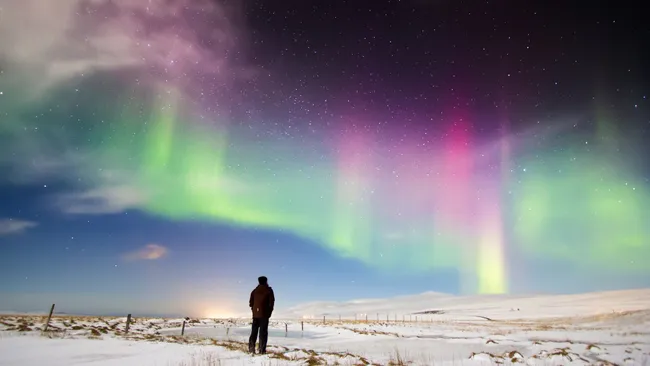

Tonight’s aurora forecast suggests mostly quiet conditions, but minor storming remains possible for those in the right locations. The Kp index, which measures geomagnetic activity, will determine visibility, with higher values indicating stronger auroral displays. Key factors to watch include the Bz value of the Interplanetary Magnetic Field. A strong southward Bz can connect with Earth’s magnetosphere, sending particles raining through the atmosphere to create the colorful light shows. If you’re hoping to see the northern lights, keep an eye on real-time space weather data and find a dark location away from city lights.
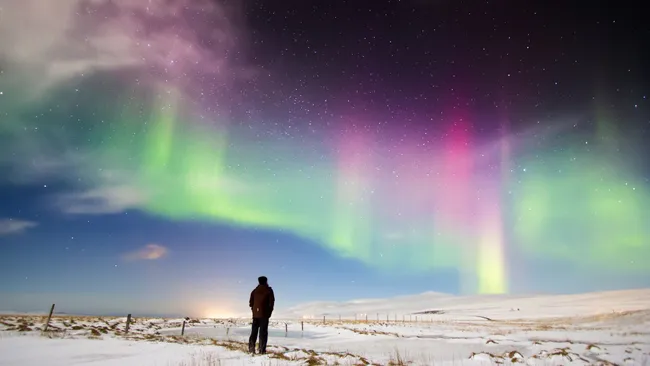
The northern lights might dance tonight. Or they might not. Here’s what to watch. Tonight’s aurora forecast suggests mostly quiet conditions across the high-latitude regions, but minor storming remains possible for those patient enough to wait and watch. The difference between a disappointing night and a magical display comes down to a few key factors that space weather watchers track obsessively.
The Kp index remains the most important number for aurora chasers. This scale measures geomagnetic activity on a range from 0 to 9, with higher values indicating stronger disturbances in Earth’s magnetic field and better chances for visible auroras. For tonight, forecasters expect relatively low Kp values, but conditions can change rapidly when solar wind hits Earth’s magnetosphere.
Beyond the Kp index, experienced aurora watchers pay close attention to the Bz value of the Interplanetary Magnetic Field. This data, readily available on space weather tracking sites, tells you which direction the magnetic field carried by the solar wind is pointing. You’re ideally looking for a strong southward Bz. When the IMF points south, it connects with Earth’s northward-pointing magnetosphere like two magnets snapping together. This connection allows solar particles to pour into the upper atmosphere along magnetic field lines.
When those energized particles collide with atoms in Earth’s atmosphere, they release energy in the form of light. Oxygen produces green and red hues. Nitrogen creates blue and purple. The specific colors depend on which atoms are hit and at what altitude. A strong southward Bz can send this process into overdrive, transforming a quiet night into a spectacular display.
For those hoping to catch a glimpse tonight, location matters as much as timing. Get away from city lights. Find a dark spot with clear views to the north. Dress warmly and bring patience. Auroras are notoriously fickle, appearing when you least expect them and hiding when you’re watching most intently.
The 2026 aurora season benefits from increasing solar activity as the sun approaches the peak of its 11-year cycle. Solar maximum, expected within the next couple of years, means more sunspots, more solar flares, and more coronal mass ejections hurling plasma toward Earth. Each of these events brings potential for stronger auroras visible at lower latitudes than usual.
Tonight probably won’t be one of those historic nights. The forecast points to quiet conditions with only minor storming possible. But auroras have a way of surprising even the experts. A sudden change in solar wind conditions, an unexpected CME arrival, or a shift in the IMF can turn a quiet forecast wrong in beautiful ways.
If you’re heading out tonight, check real-time data before you go. Look for southward Bz, watch the Kp index, and keep an eye on solar wind speed. If the numbers align, you might catch a show. If they don’t, you’ll still have spent a night under the stars, which isn’t a bad consolation prize. The northern lights will dance again. Maybe tonight. Maybe tomorrow. But eventually, they always do.




Leave a Comment