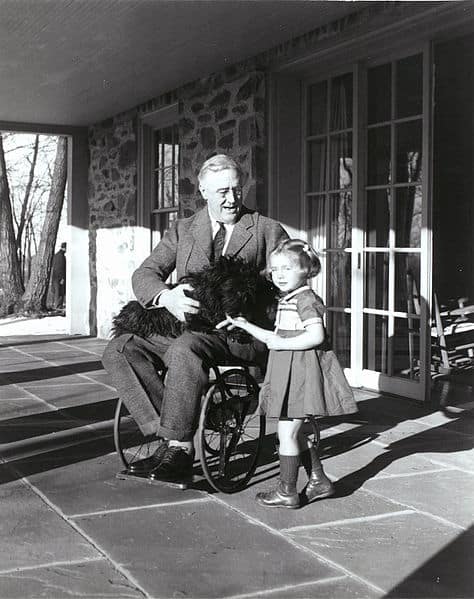

Franklin D. Roosevelt, the 32nd President of the United States, faced a life-altering paralytic illness at just 39 years old. Despite permanent paralysis below the waist, he became the first disabled U.S. president, navigating public life and diplomacy with meticulous care. The full extent of his condition was hidden from the American people and even European heads of state, requiring elaborate choreography for appearances, speeches, and travel. Using steel braces, a cane, and innovative mobility strategies, FDR overcame immense physical challenges, transforming personal adversity into public triumph while maintaining an image of strength and leadership that inspired millions.
In 1921, Franklin D. Roosevelt’s life took a dramatic turn when a sudden paralytic illness struck him at the age of 39. Diagnosed at the time with poliomyelitis, modern medical experts now suspect he may have suffered from Guillain-Barré syndrome, an autoimmune neuropathy that mimicked polio’s debilitating effects. The disease left him permanently paralyzed from the waist down, accompanied by bowel, bladder, and sensory complications. Despite the severity of his condition, Roosevelt refused to let his disability define his life or ambitions. Throughout the 1920s, he painstakingly trained to walk short distances with heavy steel braces that locked his knees, a cane for additional support, and his upper body to generate forward momentum. This determination laid the groundwork for an extraordinary political career that would eventually see him rise to the presidency while privately navigating a life of profound physical limitation.
Roosevelt’s approach to public appearances was meticulous, designed to conceal his disability from both domestic and international observers. He relied on aides to assist him while standing or walking, and lecterns during speeches were strategically used to stabilize him, eliminating the need for hand gestures and giving rise to his now-iconic head movements for emphasis. Transportation to events required elaborate planning: automobiles were parked in secluded garages, ramps and railings were installed wherever steps existed, and Track 61, the hidden Waldorf Astoria railway platform, allowed him to board and disembark presidential railcars discreetly. Even in interactions with foreign dignitaries, including European heads of state, Roosevelt’s condition remained largely unknown, preserving the public image of a robust and capable leader while he privately endured immense physical strain.
Despite these obstacles, Roosevelt’s personal struggle did not hinder his ability to lead the nation through some of its most challenging periods, including the Great Depression and World War II. His mastery of appearances, combined with his indomitable will, allowed him to inspire confidence among the American people while confronting a global crisis. By transforming private adversity into a carefully managed public persona, Roosevelt not only set a precedent for overcoming disability in the highest office but also demonstrated how perseverance, ingenuity, and courage could overcome what many might consider insurmountable obstacles. His legacy as a leader is inseparable from the quiet, relentless effort he devoted to navigating the world on terms dictated by both necessity and dignity.




Leave a Comment