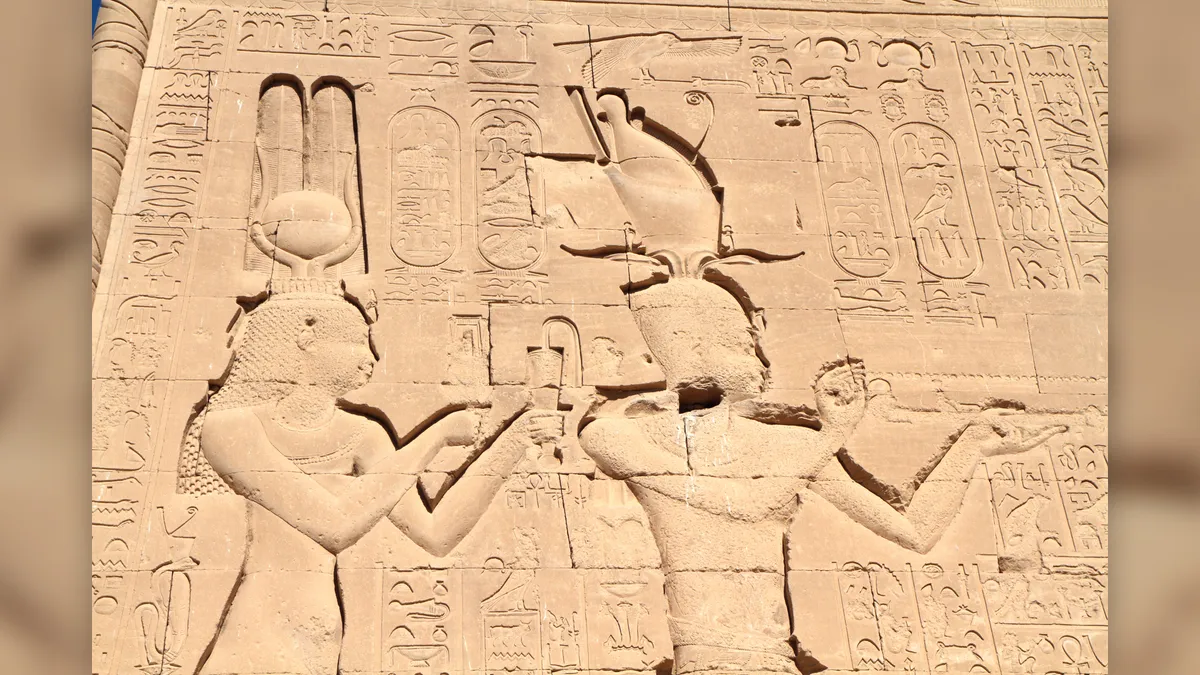

In 47 B.C., Cleopatra VII gave birth to Caesarion, claiming he was the son of Julius Caesar. The boy was later named co-ruler of Egypt, yet Caesar never officially acknowledged him. Ancient sources, including friends of Caesar like Gaius Oppius, publicly denied the claim. Following Cleopatra’s defeat and suicide in 30 B.C., Caesarion was executed, leaving no direct evidence of his lineage. Today, with no remains of either Caesar or Caesarion, historians cannot confirm whether the famed Roman general fathered Cleopatra’s heir, leaving one of antiquity’s most tantalizing mysteries unresolved.
Caesarion, formally named Ptolemy XV Philopator Philometor Caesar, was born in 47 B.C. to Cleopatra VII, the last active ruler of the Ptolemaic Kingdom of Egypt. Cleopatra claimed that the boy was fathered by Julius Caesar, the powerful Roman general and statesman. Ancient Egyptian art and inscriptions depict mother and son together as co-rulers, with Caesarion taking on the title of “King of Kings” alongside his mother. Yet, despite Cleopatra’s assertions and public displays, Caesar never officially recognized the child, leaving historians to question the boy’s true parentage. This lack of acknowledgement, combined with denials from Caesar’s contemporaries such as Gaius Oppius, fueled skepticism about whether Caesarion was indeed Caesar’s biological son.
After Caesar’s assassination in 44 B.C., Cleopatra faced shifting political landscapes, eventually allying with Mark Antony. Caesarion remained her designated heir and co-ruler of Egypt. However, Cleopatra and Antony’s defeat by Octavian, later known as Augustus, in 30 B.C. led to Cleopatra’s suicide. Shortly thereafter, Caesarion was executed on Octavian’s orders, ostensibly to remove a rival claimant to both the Egyptian and Roman thrones. With Caesarion’s untimely death and no surviving remains of either him or Julius Caesar, the question of whether the boy was Caesar’s son became a historical enigma. Without DNA evidence or reliable contemporary confirmation, speculation has persisted for centuries, with scholars divided over the legitimacy of Cleopatra’s claim.
Despite the uncertainty, Caesarion’s story offers insight into the political and dynastic strategies of ancient Egypt and Rome. His existence symbolized Cleopatra’s attempt to secure her lineage and strengthen her alliance with Rome through her alleged connection to Caesar. The boy’s public role as co-ruler demonstrated the influence of propaganda and image-making in asserting political legitimacy, even when biological ties were uncertain. Today, Caesarion’s lineage remains one of the most tantalizing mysteries of antiquity, with historians relying on art, inscriptions, and surviving accounts to piece together a narrative that will likely never be conclusively resolved. Cleopatra’s mysterious heir continues to captivate the imagination, reminding us how power, politics, and parentage intertwined in the ancient world.




Leave a Comment