

China once warned people under 50 kg to stay indoors — because the wind could blow them away.

At first, it sounded like a joke. Then the data came in.
In April 2025, northern China issued a rare and unusually blunt weather warning as extreme winds swept across the region, driven by a powerful Mongolian cold vortex. Authorities cautioned that people weighing under 50 kilograms (110 pounds) could be “easily blown away” as gusts reached 150 km/h (93 mph) — the strongest winds seen in decades.
Beijing declared its first orange gale alert in ten years, triggering widespread shutdowns. Flights were canceled, schools were suspended, tourist attractions closed, and millions of residents were urged to remain indoors as violent winds combined with sandstorms and sudden temperature drops.
The warning quickly went viral, largely because of its stark wording. But meteorologists confirmed the risk was real. Winds at that speed can knock people off their feet, hurl debris through the air, and turn everyday objects into dangerous projectiles.
In extreme conditions, vague language can be deadly. Officials chose clarity over comfort — and it worked. The message spread fast, people took it seriously, and the region avoided far worse outcomes.
Sometimes, nature doesn’t need drama.
It needs honesty.
Hospital issues alert after AI-generated videos falsely show doctors endorsing weight-loss products

A hospital trust in south London has issued a public warning after fraudulent videos began circulating online that falsely claim its doctors are promoting weight-loss products. Guy’s and St Thomas’ NHS Foundation Trust said the clips, shared on platforms such as Facebook and TikTok, do not feature real members of its staff and appear to be generated using artificial intelligence.
The videos show individuals posing as doctors applying weight-loss patches and then displaying dramatic results over time. According to the Trust, none of the people shown work at the hospital, and their faces have been blurred in reporting due to concerns that real healthcare professionals’ likenesses may have been stolen and digitally altered.
Hospital officials stressed that no clinicians at Guy’s and St Thomas’ are involved in endorsing or using these products and warned the public not to trust medical claims made in such videos. The Trust described the content as deliberately misleading and potentially harmful, particularly as it exploits public trust in medical professionals.
The BBC reported that it contacted both the company behind the products and a doctor claiming involvement, but received no response. The incident highlights growing concerns within healthcare about the misuse of AI to fabricate endorsements, spread misinformation, and exploit patient trust.
The Trust urged social media users to be cautious of health advice online and to rely only on verified medical sources, warning that AI-generated content is becoming increasingly realistic and difficult to detect.
“She felt invisible and watched at the same time — until rapid weight loss changed everything”

When Branneisha Cooper was overweight, she lived with a strange contradiction. She felt ignored in social settings, especially when out with friends, yet constantly aware of eyes on her body. Simple activities like clothes shopping, exercising, or even sitting on fairground rides came with anxiety and self-conscious calculations.
In late 2022, Branneisha, now 28 and working in Texas, began using the weight-loss injection Mounjaro. She lost around six stone (38 kg), and the physical changes came quickly. So did the social ones.
Suddenly, daily life felt lighter. Exercise no longer left her in pain. Colleagues made small talk. She felt confident doing things she once avoided — go-karting, dancing, arcades, spontaneous dates with her boyfriend. It felt like a second chance at living fully.
But the transformation carried an emotional cost.
“It was almost like I had stepped into a different world overnight,” she said. “People were suddenly more friendly, more attentive, and I was given opportunities and respect that didn’t exist before.”
What unsettled her most was realizing she hadn’t changed as a person — only how others treated her had. The kindness, attention, and validation arrived not with growth or character, but with weight loss.
“That rapid shift was jarring,” Branneisha explained. “It really opened my eyes to how deeply size bias is ingrained in our culture.”
Her story reflects a quiet truth many experience after rapid weight loss: the joy of physical freedom mixed with grief over how conditional acceptance can be.
“After losing weight, strangers started smiling — and she couldn’t ignore what that meant”

For Jess Phillips, being overweight meant feeling both exposed and erased. She avoided eye contact in public, worried about fitting into seats on planes or public transport, and felt like her body took up “too much space.” Strangers had shouted insults at her from cars. At festivals, she felt judged before she ever spoke.
A trip to Sorrento in 2023 became a turning point. “Everyone was staring at me the whole time,” she recalled. The experience pushed her to begin weight-loss injections later that year.
As the weight came off, the world reacted differently.
“Strangers are a lot more chatty with me now,” Jess said. Where once she felt scrutinized, she now felt something new — anonymity. “I don’t feel like people are looking at me anymore. I feel invisible in a nice way.”
Others noticed the same shift. Amy Toon, a content creator from Solihull, said she once avoided shopping in person out of fear of being stared at. After losing weight, people smiled at her, made eye contact, acknowledged her presence.
“It’s really strange,” she said. “And it’s also really sad.”
Sociologists describe this as being “hyper-visible” and “hyper-invisible” at the same time — ignored as a person, but made into a spectacle because of body size. Society, experts say, holds rigid expectations about how overweight people should exist: quietly, apologetically, and unseen.
Jess says the experience forced her to confront an uncomfortable truth. The confidence she gained wasn’t just internal — it was mirrored back by a world suddenly more willing to see her.
And that realization, she says, is something weight loss doesn’t automatically heal.
A man facing near-certain death is trying to break a world record for fastest weight loss — doctors warn the method could be dangerous
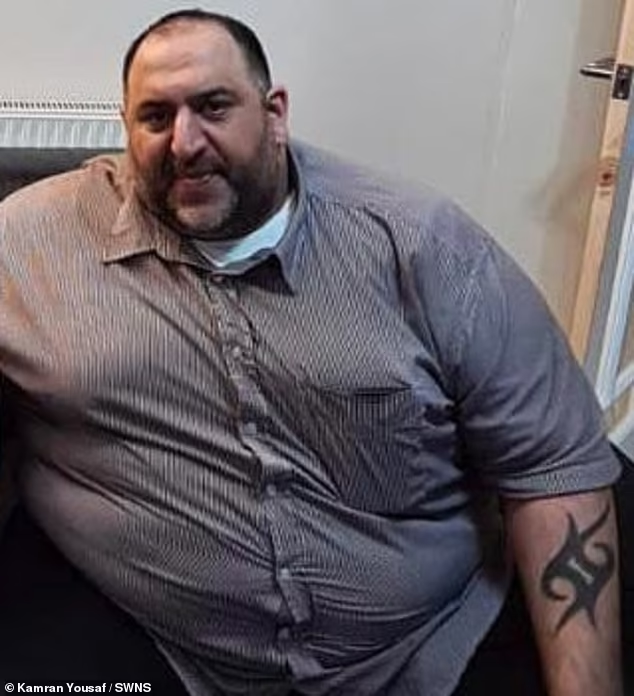
Kamran Yousaf, a 48-year-old man from Birmingham, was once told he had just a 30% chance of surviving the next five years. At his heaviest, he weighed 32 stone and was living with severe respiratory failure, arthritis, and long-term disability. Doctors warned that without immediate change, his life expectancy was rapidly shrinking.
In August 2024, Yousaf decided to act — radically. He adopted an extreme calorie-restriction plan, consuming between 100 and 800 calories a day, far below NHS recommendations. His reasoning was blunt: “If I didn’t take action, I would have died in days.”
So far, the results are dramatic. He has lost 63 kg, dropping from 32 stone to 22 stone in under a year. He is now aiming to lose 100 kg in 365 days without surgery — a feat that could set a national record for his age group.
Yousaf says hunger is no longer an issue and describes his approach as psychological rather than physical. “The taste of food lasts seconds,” he explained. “Once you get over that, you realise you don’t need to eat most of the time.” He insists his method is not advice for everyone, but a last-resort response to imminent health collapse.
In October, he joined a weight management clinic and was prescribed Wegovy, accelerating his weight loss further. By January 2025, he had already shed another 14 kg.
However, health experts are raising serious concerns. Nutrition and weight-loss specialists warn that such severe calorie restriction can cause dangerous deficiencies, muscle loss, heart rhythm problems, weakened immunity, and organ damage. They stress that rapid weight loss without sustainable eating habits can be medically risky, especially long term.
“Chasing record weight loss is not a healthy goal,” said performance and weight-loss coach Vanessa Sturman. “Sustainability, nutrition, and professional guidance are critical — especially for someone with complex health conditions.”
Despite the warnings, Yousaf says his journey has already transformed his quality of life. His breathing has improved, physical pain has eased, and even his shoe size has dropped. Inspired by his progress, he has enrolled in an NHS-backed course to help others struggling with obesity.
Medical bodies continue to emphasize that gradual weight loss — around 0.5 to 1 kg per week — remains the safest approach for most people. Yousaf’s case, while extraordinary, highlights a difficult tension between desperation, survival, and long-term health.
His story raises a challenging question: when someone is facing death, where is the line between extreme risk and necessary action?
Lizzo debuts slimmer look at Vogue World — and explains the discipline behind her transformation

Lizzo turned heads at Vogue World: Hollywood 2025, stepping onto the scene in a shimmering silver gown that highlighted a noticeably slimmer figure. The four-time Grammy winner joined a star-studded crowd at the fashion-meets-performance event, where music, runway theatrics, and celebrity appearances blended into a single spectacle.
Inside the show, Lizzo was seen chatting with director Baz Luhrmann as the runway unfolded with dramatic moments. Julia Garner appeared in a towering powdered wig and ruffled gown inspired by Marie Antoinette, while Cara Delevingne delivered a striking walk. Musical performances included Gracie Abrams, who opened a medley from the back of a truck before moving down the runway, and Doja Cat, who brought high energy in a custom chainmail look inspired by Tina Turner’s Mad Max Beyond Thunderdome style.
After the show, Lizzo attended post-event celebrations at the Château Marmont alongside her partner, comedian Myke Wright. The couple were photographed leaving hand-in-hand, adding to the buzz surrounding the night.
Earlier this year, Lizzo addressed her changing appearance openly. She credited her weight loss primarily to discipline, lifestyle changes, and a focus on calorie balance, while acknowledging that she briefly tried weight-loss injections like Ozempic.
“I’ve tried everything,” she said on the Just Trish podcast. “It’s just the science — calories in versus calories out. Ozempic works because you eat less food.”
She added that the effect could be replicated without medication through mindset and consistency: “If you can just do that on your own and get mind-over-matter, it’s the same.”
Lizzo also revealed a major dietary shift. After years of veganism, she moved toward a protein-focused diet that includes meat and fish. “When I actually started eating whole foods — beef, chicken, fish — I was full,” she explained. “I wasn’t expanding my stomach with things that weren’t filling me up.”
Despite visible changes, Lizzo remains firm in her message around body image. Speaking to Women’s Health UK, she said she still considers herself plus-size and sees her current body as simply a smaller version of who she has always been.
“Body positivity has nothing to do with staying the same,” she said. “It’s the radical act of daring to exist loudly and proudly in a society that told you you shouldn’t exist.”
Her appearance at Vogue World reinforced that message — transformation on her own terms, without abandoning the identity and confidence that defined her rise.
Jelly Roll debuts nearly 300-lb weight loss on red carpet as wife Bunnie Xo steals laughs in latex

Jelly Roll turned heads at the Jan. 31 Pre-Grammy Gala, proudly showing off a dramatic transformation after losing nearly 300 pounds since beginning his weight-loss journey in 2022. Walking the red carpet arm-in-arm with his wife, podcast host Bunnie Xo, the country star looked almost unrecognizable from his heaviest days, when he once weighed 550 lbs.
Now weighing around 265 lbs., Jelly Roll — born Jason DeFord — opted for a sleek, all-black textured suit, while Bunnie made a bold statement in a skintight metallic latex dress. The couple shared kisses for photographers, radiating confidence and playful chemistry.
Behind the scenes, the outfit choice came with a humorous twist. Ahead of Jelly Roll’s tribute performance to Ozzy Osbourne, Bunnie joked that getting into the latex dress required extra effort. “I had to literally use lube to get into this outfit,” she told PEOPLE, with Jelly Roll laughing alongside her.
The singer didn’t shy away from the joke, calling the experience a “10 out of 10” as a husband and playfully praising his wife’s look. Their banter quickly became a highlight of the night, showing how the couple balances major life changes with humor.
Beyond the laughs, the moment marked a milestone for Jelly Roll. His weight loss has been widely credited to sustained lifestyle changes rather than quick fixes, and he has spoken openly about focusing on health, longevity, and being present for his family — including his children, Bailee Ann and Noah Buddy.
As Jelly Roll heads into the 2026 Grammy Awards with multiple nominations, his red-carpet appearance wasn’t just about fashion or jokes — it symbolized a long, difficult journey and a transformation he’s proud to share, step by step, under the spotlight.
She was told she was “too fat” for life insurance — and it became the moment that changed everything
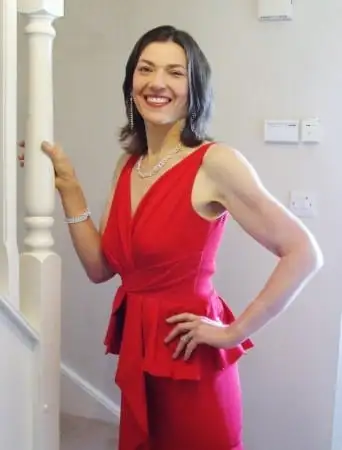
At just 21 years old, Lucy Rintoul was shocked and humiliated when five life insurance companies rejected her application, bluntly stating she was too overweight to insure. What initially felt like discrimination soon forced a painful realization: her weight had reached a point where it was limiting not just her health, but her future.
At her heaviest, Lucy weighed over 21 stone and wore a size 26. Living in London during a period marked by grief, loneliness, and depression, she turned to comfort food to cope with the death of her beloved dog and a close friend who passed away from cancer. The emotional toll, combined with isolation and an unhappy environment, caused her weight to spiral while she remained in deep denial about how severe it had become.
The insurance rejections became a wake-up call. Lucy feared leaving her husband unprotected and realized her weight was preventing her from truly living — from traveling, going to the cinema, fitting into chairs at work, or even fastening a seatbelt on a plane. One particularly painful moment came when a reinforced office chair broke beneath her, sealing her decision to change.
After moving to Alexandria, Scotland, for a fresh start, Lucy joined a Slimming World group in July 2012. For the first time, she found a plan that didn’t leave her hungry, ashamed, or judged. Instead of deprivation, she learned balance — enjoying familiar foods while building healthier habits.
As the weight came off, Lucy slowly introduced exercise, starting with walks alongside her dog and eventually adding home workouts with dumbbells. Within just one year, she reached her initial target weight of 10st 6lbs — a loss of over 12 stone. Realizing she could go further safely, she set a new goal and reached 9st 13lbs.
Now a confident size 10, Lucy describes her transformation as completely life-changing. Once shy and desperate to blend into the background, she now embraces attention, public speaking, and photographs — things she once avoided at all costs. Her wardrobe, confidence, and outlook on life have all been reborn.
Lucy’s journey wasn’t just about weight loss. It was about reclaiming dignity, mobility, confidence, and peace. What began as humiliation became the most powerful decision of her life — proof that sometimes the hardest moments become the turning point that saves us.



Leave a Comment