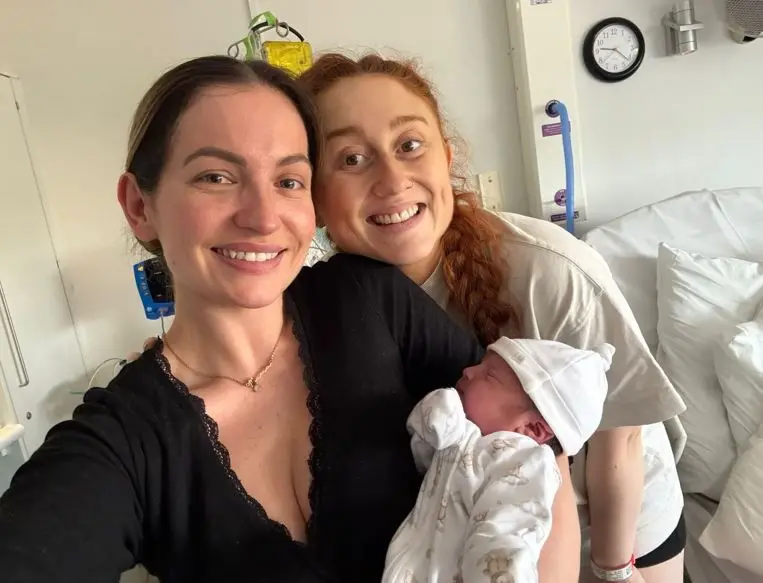

Unable to Carry a Child, This Midwife Delivered Her Own Baby With the Help of Her Best Friend in an Extraordinary Birth Story.
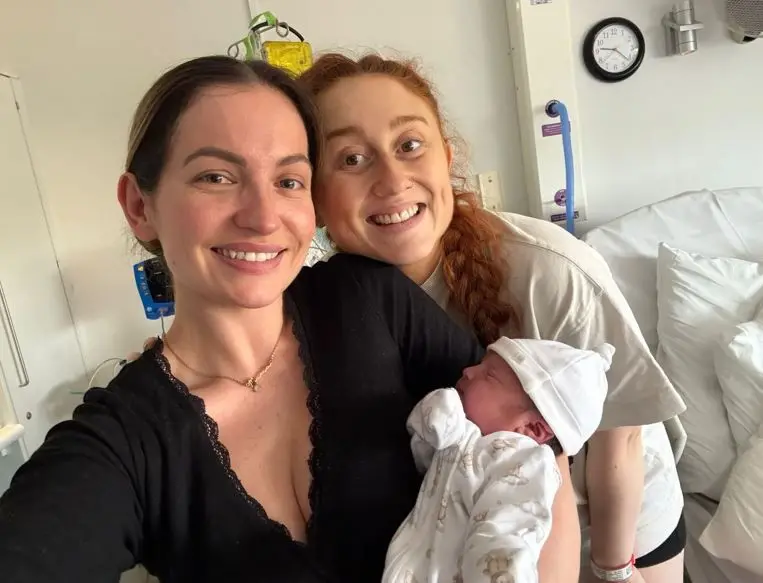
For years, she helped bring new life into the world but believed she would never experience motherhood herself.
The midwife, whose career revolved around supporting women during childbirth, was diagnosed with a medical condition that made carrying a pregnancy impossible. While she remained deeply passionate about her work, every birth she attended quietly reminded her of the child she longed for but could not have.
Rather than letting that diagnosis end her dream of becoming a mother, she chose another path one built on trust, friendship, and love.
Her best friend stepped forward.
After long conversations, medical consultations, and emotional reflection, the two women made the life-changing decision to pursue surrogacy together. The friend would carry the baby, not as a transaction, but as an act of profound generosity. Throughout the pregnancy, they attended appointments side by side, sharing the anxiety, excitement, and anticipation that comes with waiting for a child.
As the due date approached, one question remained: how would the birth unfold?
The answer became the most extraordinary part of the story.
Because of her professional background, doctors and hospital staff agreed that the midwife could be present not only in the delivery room but actively involved in the birth. When labor began, roles blurred between professional expertise and deeply personal emotion. She coached, reassured, and supported her best friend, just as she had done for countless patients over the years.
Then came the moment she had waited for her entire life.
As the baby crowned, the midwife stepped forward. With the guidance of medical staff, she caught her own child as they entered the world, hands trembling, heart racing, tears falling freely. In one instant, years of loss, longing, and uncertainty were replaced by a single, overwhelming truth: she was finally a mother.
The room fell silent before erupting into tears and joy.
For her best friend, the moment was just as powerful witnessing the woman she loved finally hold the child she never thought she’d have. For the midwife, it was a reminder that family is not limited by biology, but built through courage and compassion.
Today, the two women remain inseparable, bound forever by a moment that changed both of their lives. The baby, born through friendship and trust, carries a story that began long before their first breath.
It wasn’t just a birth.
It was the fulfillment of a dream once thought impossible.
14-Year-Old Boy Beats Rare Cancer After Seven Months of Treatment, Rings Hospital Bell and Shares Powerful Message to “Just Keep Going”
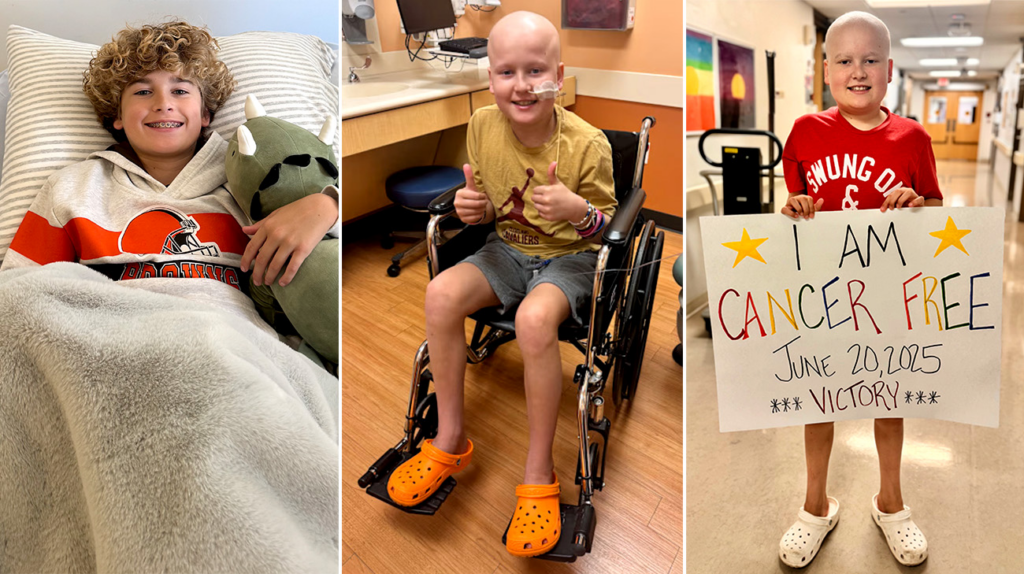
When Evan Lallo walked down the halls of Cleveland Clinic Children’s, high-fiving nurses and hugging doctors, it marked more than the end of treatment; it marked the end of a life-altering chapter that began with what seemed like a simple sports injury.
The 14-year-old from Kirtland, Ohio, was diagnosed with Ewing sarcoma in November 2024, a rare and aggressive form of bone cancer. But months before the diagnosis, Evan was just an active teenager juggling school and sports. He played basketball, football, and lacrosse, and when pain developed in his right shoulder during the summer, doctors initially believed it was rotator cuff tendinitis.
Despite treatment, the pain worsened. Evan slowly lost strength and function in his arm. One day at school, he couldn’t even hold a pencil. That moment sent his family searching urgently for answers.
An MRI revealed a mass near his neck, leading to a referral to Cleveland Clinic Children’s. There, a multidisciplinary team worked to identify the unusual tumor, which was growing along critical nerves and affecting Evan’s arm and spine. The diagnosis came quickly — and treatment began the very next day.
For the next seven months, Evan’s life was defined by chemotherapy, radiation, and hospital stays. His mother, Megan Lallo, says they spent more than 70 nights in the hospital. The sudden shift from healthy teenager to cancer patient was overwhelming, but Evan never gave up.
Doctors and family worked hard to preserve a sense of normal life. His teachers helped him stay connected to school, and his medical team even arranged a special moment for Evan to step onto a basketball court during a game. Despite limited use of his right arm, Evan scored on his first shot, a moment that lifted his spirits and reminded him of what he was fighting for.
Although treatment shrank the tumor, nerve damage continued to limit his arm movement. To help restore function, Evan underwent a complex nerve transfer surgery in May 2025, performed by one of the few neurosurgeons in the U.S. specializing in the procedure. Recovery required patience, time, and intensive physical therapy.
Then came the moment everyone had been waiting for.
In June 2025, Evan’s scans showed no evidence of cancer. Surrounded by his care team, friends, and family, he rang the Bravery Bell, a symbol of survival, strength, and resilience. Even nurses who had cared for him earlier returned just to be there.
Today, Evan is focused on healing, returning to school full time, and getting back to the sports he loves. He recently threw the ceremonial first pitch at a Cleveland Guardians game, a milestone he once couldn’t imagine.
His message to others facing illness is simple but powerful: “Just keep going.”
LITTLE HERO Boy, 8, abused so badly by his birth parents his legs were amputated climbs 780ft summit – to help others.
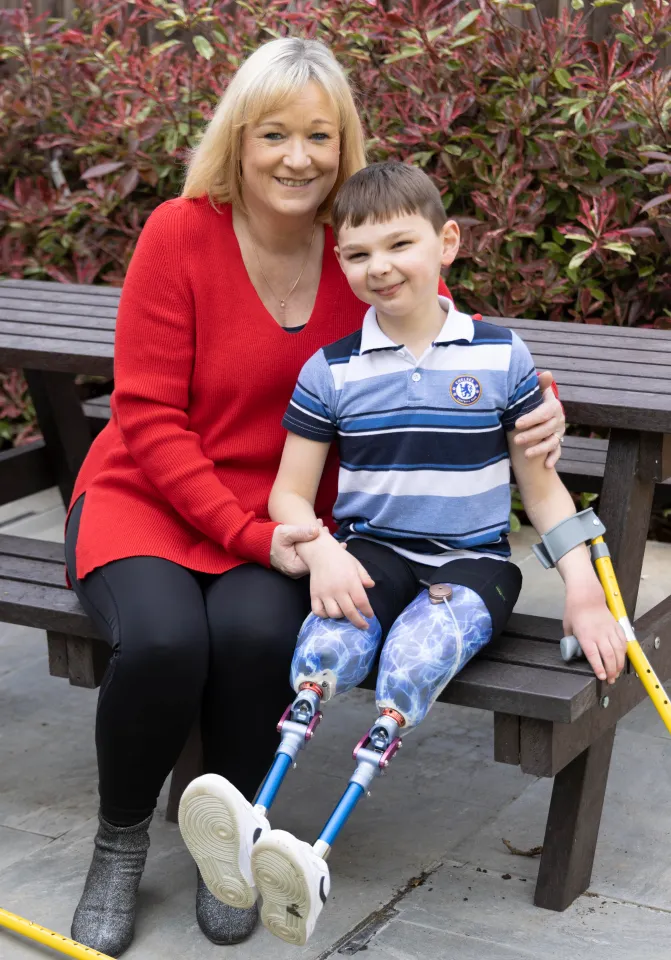
At just eight years old, Tony Hudgell has already shown more courage and compassion than many adults will in a lifetime.
Tony was only 41 days old when he suffered unimaginable abuse at the hands of his biological parents, Jody Simpson and Tony Smith. The injuries were so severe that doctors were forced to amputate both of his legs to save his life. He survived, but the damage done in those early weeks would shape his future forever.
Now adopted and lovingly raised by his adoptive parents, Tony has grown into a determined, bright, and deeply empathetic child. Rather than allowing his past to define him, he has chosen to turn his experience into action not for himself, but for other children who may still be at risk.
That determination was on full display when Tony climbed a 780-foot summit, a remarkable physical achievement for any child, let alone one using prosthetic legs. The climb was not about breaking records or gaining attention. It was Tony’s way of sending a message.
When Tony learned that his abusive mother had been released from prison in February after serving just six years of a ten-year sentence, his reaction stunned even those closest to him. His first concern was not fear or anger for himself, but worry for other children she might encounter in the future.
According to his adoptive mother, Paula, Tony immediately began asking questions about how other children could be protected. That concern became the motivation behind his climb, a symbolic and physical effort to raise awareness, encourage reform, and help prevent similar tragedies.
Tony’s story has resonated widely because it challenges assumptions about resilience and strength. Despite the trauma he endured before he could even speak, he approaches life with optimism, curiosity, and kindness. His determination during the climb showed not only physical endurance, but emotional resolve.
Doctors, supporters, and onlookers praised Tony’s effort, calling it inspirational and humbling. For Tony, however, the achievement wasn’t about praise. It was about using his voice and visibility to stand up for children who cannot yet stand up for themselves.
His journey has also reignited public debate about sentencing in child abuse cases and whether early release adequately reflects the severity of harm caused to victims. Advocates say Tony’s story highlights the lifelong consequences of abuse and the importance of safeguarding measures that prioritize children’s safety above all else.
Today, Tony continues to thrive with the support of his family and community. He enjoys school, challenges himself physically, and remains determined to help others. His summit climb stands as a powerful reminder that heroism doesn’t come from size, age, or circumstance it comes from heart.
Tony Hudgell’s story is not just one of survival. It is a story of courage, compassion, and a child who chose hope over hatred.
4-Year-Old Girl Hospitalized After Flu Turns Deadly, Survives Rare Brain Condition ICU Doctors Say Only 10% Survive.
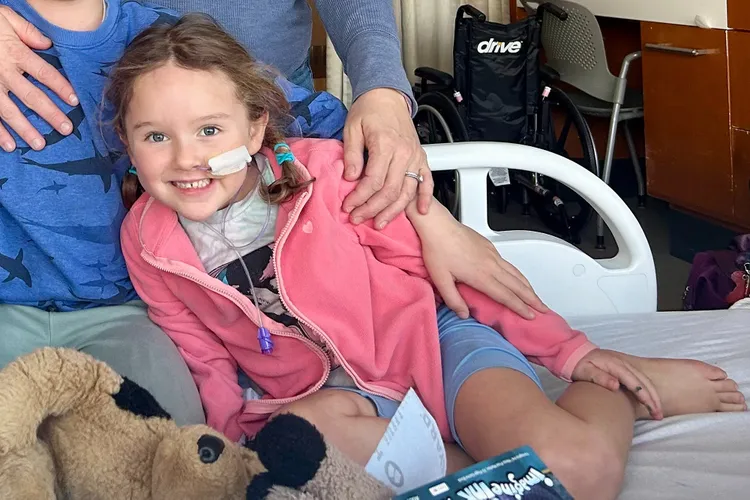
A healthy Massachusetts 4-year-old girl, Althea, spent Christmas in the hospital after a common flu took a frightening turn, resulting in a rare and life-threatening brain condition.
Back in December 2025, Althea began showing typical flu symptoms: fever, dizziness, and fatigue. But within days, she suffered a seizure, prompting her mother, Caitlin Lyons, to rush her to Mass General Hospital. Doctors diagnosed her with Acute Necrotizing Encephalopathy (ANE), a rare complication of the flu that causes rapid brain swelling. Only about 10% of children survive this condition, according to medical reports.
“It came out of nowhere. Quite literally healthy one day and on death’s door the next,” Lyons recalled. “We could never have done anything to prevent it.” The suddenness of the illness stunned her family and caregivers.
Althea was admitted to the ICU, where she spent nearly two weeks under intensive care. Doctors fought to stabilize her, while family and friends prayed for a miracle. Her daycare in Framingham had already seen 15 to 20 flu cases, spreading rapidly among staff and children, but no one expected it to escalate so severely for one child.
Despite the odds, Althea’s condition gradually improved. Thanks to immediate medical intervention and likely prior flu vaccination, she survived what many considered impossible. Her mother describes the outcome as “just luck, medical intervention, and acting quickly. It’s a miracle that she’s here with us and doing as well as she is.”
Althea’s recovery is ongoing. Her fine motor skills have been affected, and she exhibits slight tremors both expected to improve over time. Doctors anticipate that she could make a full recovery within three to six months, allowing her to resume normal activities and childhood milestones.
To support Althea’s medical expenses, including specialized therapies and rehabilitation, her school community set up a GoFundMe fundraiser, raising over $12,000 towards a $14,000 goal. Director Carol Ann Ritter shared the heartfelt message: “We are coming together as a school community to support one of our families during an unimaginable time. Their 4-year-old daughter recently contracted Flu A, and in a devastating turn of events, her body attacked her brain instead of fighting the virus.”
The story has resonated across the local community, highlighting both the unpredictability of the flu and the importance of early vaccination and quick medical response. Caitlin Lyons urges parents to monitor flu symptoms closely, especially when children experience unusual lethargy or neurological signs.
Althea’s courage, combined with fast medical intervention and community support, serves as a reminder of the fragility of life and the resilience of children. While the scare has left a lasting impact on her family, they are hopeful, optimistic, and focused on Althea’s gradual path to recovery.
1 Dead, 36 Sickened as Deadly Fungus Hits Tennessee: Officials Warn Public About Histoplasmosis Risk Amid Ongoing Outbreak
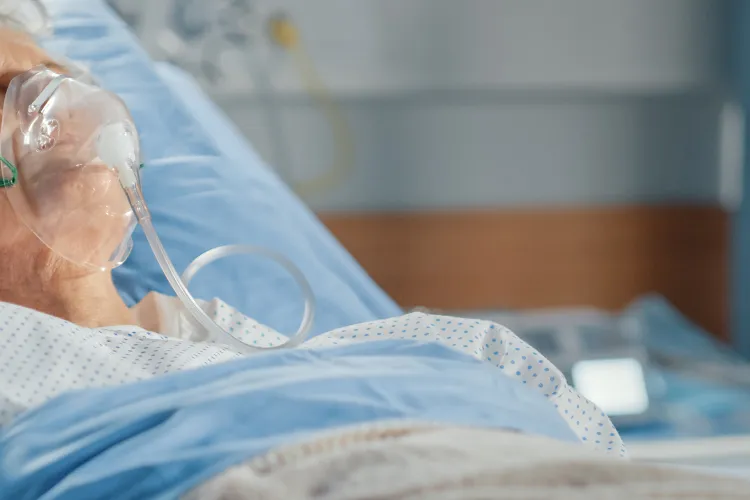
Tennessee is facing a serious public health alert as an outbreak of histoplasmosis, a rare but potentially lethal fungal infection, has sickened 36 people and claimed the life of one woman. Health officials are urgently working to identify the source of the outbreak and contain its spread.
The Tennessee Department of Health first confirmed the surge in December 2025 after 18 residents fell ill, primarily in Williamson and Maury Counties. Since then, cases have continued to rise, with one confirmed death: 39-year-old Alyssia Brown of Spring Hill, Tenn. Her family told The New York Times that she tested positive for histoplasmosis and succumbed to the infection on December 15. Alyssia’s sister, Amity Brown, noted that ongoing construction and excavation in her community may have disturbed soil containing the fungus.
Histoplasmosis is caused by inhaling spores of the fungus Histoplasma capsulatum, which commonly grows in soil contaminated with bat or bird droppings. While most healthy individuals show no symptoms, those with weakened immune systems, infants, or people exposed to large amounts of spores can experience severe illness. Symptoms often appear three to seventeen days after exposure and include fever, chills, headache, chest pain, and a dry cough. In some cases, the infection can lead to life-threatening complications, such as respiratory failure or cardiac arrest.
Officials have stressed that identifying the exact source of exposure is often difficult, as histoplasmosis spores are widespread in Tennessee soil. “Histoplasmosis is commonly found throughout the soil in Tennessee, so it can be challenging to completely prevent exposure,” a Department of Health spokesperson told PEOPLE. “Those with weakened immune systems or high exposure are at greatest risk of severe infection.”
Doctors and public health experts are urging residents to take precautions, particularly when working near old buildings, construction sites, or areas with heavy bird or bat activity. Soil disruption can release spores into the air, which can be inhaled and trigger illness. Anyone experiencing flu-like symptoms after soil exposure is advised to seek medical attention immediately.
The outbreak has raised alarms in the local community, particularly among families, construction workers, and older adults. Hospitals in affected areas are on alert, screening patients for respiratory symptoms that could indicate histoplasmosis. Treatment typically involves antifungal medications, which can be lifesaving if administered promptly.
Alyssia Brown’s death highlights the severe potential of this infection and the importance of swift public awareness. Health officials continue to investigate the outbreak and are urging Tennesseans to remain vigilant. Community members are reminded that even routine soil exposure can pose risks, especially for vulnerable individuals.
With 36 confirmed cases and counting, authorities are calling this one of the more serious histoplasmosis outbreaks in recent Tennessee history. Local residents are encouraged to stay informed through public health updates and to seek help if symptoms develop.
THIS 45-YEAR-OLD WOMAN JUMPED INTO AN ICY RIVER TO SAVE HER DOG-FOUR MONTHS LATER, SHE WAS FOUND WITH HIM IN HER ARMS, IN ONE LAST HUG.
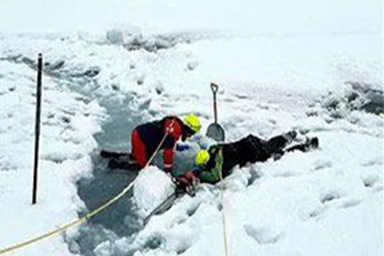
She left her house expecting nothing more than a peaceful walk with the people and animals she loved most. Instead, Amanda Richmond Rogers’ final moments became a testament to courage, instinct, and selfless love.
On December 23, 2023, Amanda, a 45-year-old nurse living in Eagle River, Alaska, set out with her husband, Dr. Brian Rogers, to celebrate their 18th wedding anniversary. Along with their two dogs, they headed onto the snowy North Fork Eagle River trail, a familiar and scenic path woven through Alaska’s winter landscape. It was meant to be simple, quiet, and joyful.
Then, in a matter of seconds, everything changed.
One of their dogs, Groot, slipped onto a patch of thin ice and suddenly disappeared into the freezing river below. Without hesitation, Brian jumped in, smashing through the ice and diving beneath the surface, desperately searching in the dark, icy water. When he resurfaced without Groot, panic written across his face, Amanda saw all she needed to see.
She didn’t pause. She didn’t argue. She didn’t calculate risk.
Amanda went straight into the water after her dog and she never came back up.
The river swallowed the moment, leaving Brian alone on the ice and a family suspended in unanswered questions. For the next four months, her loved ones waited. Her four sons Leif, Liam, August, and Bodhi held onto hope as search efforts continued through brutal winter conditions.
Then, on March 24, 2024, a passerby made a devastating discovery near the North Fork trail.
Amanda had been found
She was still holding Groot in her arms.
The image shattered hearts across Alaska and beyond a mother, a nurse, a rescuer to the very end. To her family, the discovery was both unbearable and deeply symbolic. Her sister, Jennifer Richmond, later shared what Amanda’s sons already believed: “She really did die a hero.”
That belief was grounded in who Amanda was long before that winter day. She worked as an emergency room and pediatric hospice nurse, someone whose career was defined by running toward pain, fear, and crisis when others could not. Comforting families, caring for children at the end of life, and standing steady in moments of unimaginable grief was not just her job, but her calling.
In the end, Amanda responded the same way she always had by moving toward someone who needed help, without hesitation.
Her story is not just one of loss, but of instinctive love and moral clarity. In a split second, she chose compassion over self-preservation. It’s a choice few of us are ever tested on and one she made without a second thought.
Amanda Richmond Rogers left home that day for an anniversary walk. What she left behind instead was a legacy of bravery, devotion, and a reminder that heroism doesn’t always wear a uniform. Sometimes, it wears winter boots, answers love’s call, and holds on until the very end.
NICOLAS CAGE STANDS WITH HIS WIFE, RIKO SHIBATA-HE MET HER IN JAPAN, AND SHE’S 31 YEARS YOUNGER.
They first met in Shiga, Japan, through mutual friends while Cage was filming Prisoners of the Ghostland. At the beginning, it was simple and unassuming: quiet conversations, casual time together, no rush. There was no spectacle, just two people getting to know each other.
Then filming ended, and reality set in. Distance replaced proximity. Time zones replaced shared mornings. What followed were long-distance calls, late-night FaceTimes, and that unmistakable ache of missing someone you didn’t expect to matter so much.
At some point, Cage decided not to overthink it.
During one of their FaceTime calls, he asked her to marry him. There was no elaborate setup, no audience, just honesty. Riko said yes. Soon after, he mailed a black diamond engagement ring all the way to Japan, turning a digital moment into something tangible.
On February 16, 2021, they married quietly at the Wynn Hotel in Las Vegas. The date was chosen intentionally, to honor Cage’s late father, August Coppola. True to both of their worlds, the ceremony blended cultures and beliefs. Cage wore Tom Ford. Shibata wore a traditional Japanese bridal kimono. Their vows incorporated both Catholic and Shinto elements not as a statement, but as a reflection of who they are.
The marriage didn’t end the conversation around their age difference. Online, jokes continue to circulate, with strangers questioning motives or making assumptions. But in public, Cage and Shibata appear unbothered. On red carpets, they walk hand in hand, comfortable and composed, moving like people who have already decided whose opinions count and whose don’t.
On September 7, 2022, they welcomed their daughter, August Francesca Coppola Cage, in Los Angeles. She is Riko’s first child and Cage’s third, joining his sons Weston and Kal-El. The birth quietly cemented what had already been clear: this wasn’t a fleeting chapter, but a shared life.
Their story doesn’t fit neatly into expectations, and that’s exactly why it draws attention. It’s not loud, not defensive, and not performative. It’s a relationship built across distance, language, culture, and decades held together by choice.
In a world quick to judge from the outside, Nicolas Cage and Riko Shibata seem content doing something rare: living their story for themselves.
AMID RISING TENSIONS, JAPAN’S LAST TWO GIANT PANDAS RETURN TO CHINA -AND PEOPLE WAIT HOURS IN LINE FOR THEIR ONE LAST GOODBYE.
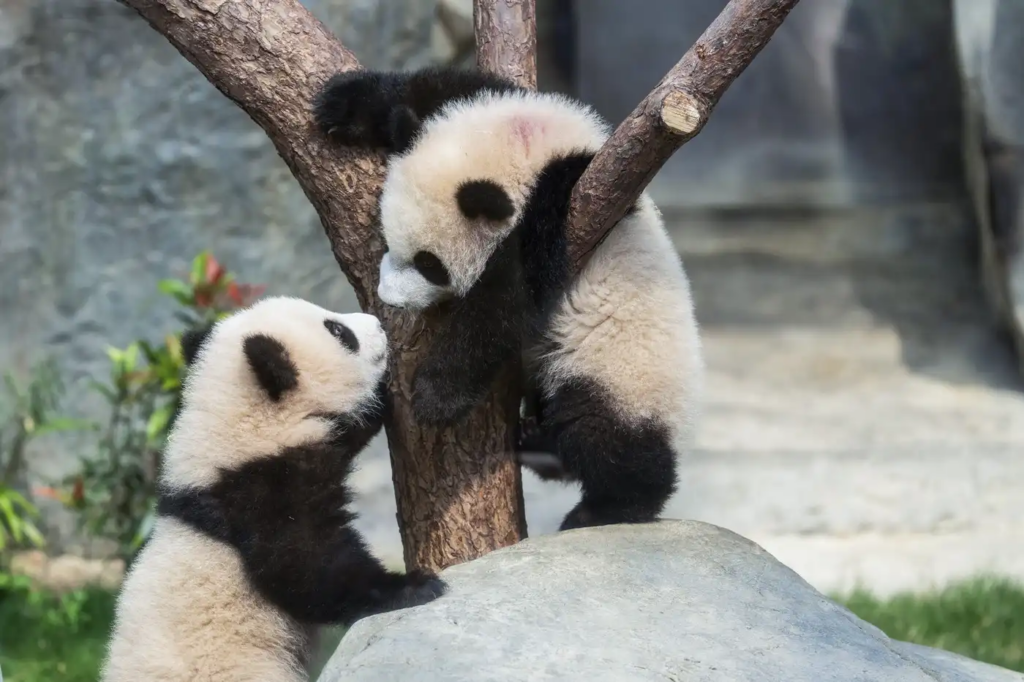
In the bitter cold of a Tokyo winter, people stood patiently in long lines, bundled in thick coats and scarves, waiting for a moment that would last barely a minute. Some clutched panda plushies. Others wiped away tears. All had come for the same reason: to say goodbye.
On January 25, 2026, Ueno Zoo held the final public viewing of its beloved giant panda twins, Xiao Xiao and Lei Lei. Demand was overwhelming. Tickets were so limited that the zoo had to rely on a lottery system, and even those lucky enough to win were allowed only about sixty seconds at the glass. Still, people traveled from across Japan, braving the cold for one last glimpse.
Inside the enclosure, the twins were calm and unbothered, quietly crunching bamboo as they always had. Xiao Xiao, the shyer brother, stayed closer to the back, while Lei Lei, the braver sister, moved with relaxed confidence. The contrast only made the moment more poignant for fans who had followed their personalities since birth.
Born on June 23, 2021, Xiao Xiao and Lei Lei quickly became national favorites. Their parents, Shin Shin and Ri Ri, had already made history as symbols of friendship between Japan and China. The twins’ arrival during a global pandemic brought rare joy, drawing millions online and in person once restrictions eased.
Now, just four years later, the twins are preparing to leave Japan. On January 27, 2026, they will be flown to China as part of Beijing’s long-running panda loan program an arrangement under which pandas remain Chinese property and are eventually returned.
But this goodbye carries a weight far beyond two animals.
Once Xiao Xiao and Lei Lei depart, Japan will have no giant pandas for the first time since 1972. That year marked a turning point in history, when China sent pandas to Japan to celebrate the restoration of diplomatic ties. For more than half a century, pandas have served as living symbols of cultural exchange, diplomacy, and soft power black-and-white ambassadors quietly shaping public affection.
Today, relations between Japan and China are strained, and no new panda loans have been announced. Unlike past farewells, this one comes with no promise of replacement, no timeline for return. That uncertainty has transformed a routine zoo transfer into something far more emotional.
For many visitors, this wasn’t just about pandas. It was about childhood memories, family traditions, first zoo trips, and a sense of continuity that suddenly feels broken. The pandas had outlasted political cycles, economic shifts, and generations of visitors. Their absence leaves a silence that feels symbolic.
As people stepped away from the glass, some bowed slightly. Others lingered, reluctant to leave. Outside, the winter air felt sharper.
Xiao Xiao and Lei Lei will begin a new chapter in China, where they belong by agreement and heritage. But in Japan, their departure closes a fifty-year chapter not just in a zoo, but in the shared emotional history between two nations.
This goodbye wasn’t loud or dramatic. It was quiet, patient, and deeply human just like the pandas themselves.
ROBIN WILLIAMS ASKED EVERY FILM PRODUCTION TO HIRE 10 HOMELESS PEOPLE, A QUIET ACT OF KINDNESS THAT HELPED ABOUT 1,520 PEOPLE FIND WORK OVER HIS CAREER.

Robin Williams is remembered around the world for his humor, speed-of-thought improvisation, and the joy he brought to millions. But behind the scenes, far from cameras and applause, he was also trying to help people who were struggling in ways that rarely make headlines.
According to his daughter, Zelda Williams, Robin made a point of asking that unhoused people be hired on his projects especially while he was on tour. Instead of limiting his help to donations or one-time charity gestures, he wanted people to have real, paid jobs. A paycheck. A role. A sense of dignity that comes from being needed and trusted.
This wasn’t about charity as performance. It was about participation.
That approach is echoed in stories shared by Brian Lord, Robin Williams’ former booking agent. Lord has said that Williams’ tour rider the document outlining an artist’s requirements for a show included a request that people experiencing homelessness be hired as part of the local crew. Load-in, setup, teardown, support work. Jobs that paid and counted.
There’s an important distinction here: we don’t have the exact wording of that rider, and there’s no public record confirming how many people were hired this way. Numbers often shared online like claims that “over 1,500 people” were helped are estimates, not verified facts. What is confirmed is the pattern itself, repeated over years and across locations.
Robin Williams didn’t keep score. He didn’t publicize it. And he didn’t turn it into a brand.
Beyond these quiet hiring practices, Williams was also outspoken when it mattered. In 1990, he testified before the U.S. Senate about homelessness, lending his voice to an issue many preferred to ignore. He also spent years supporting Comic Relief, helping raise significant funds for people facing poverty and housing insecurity.
What ties all of this together is intention. Robin Williams seemed less interested in being seen as generous than in being useful. He understood that money helps but dignity lasts. A job can stabilize someone, restore confidence, and open doors that charity alone cannot.
People who encountered him often described this same instinct in small moments: stopping to talk, listening closely, treating everyone as worthy of respect. These actions rarely made the news, and that may have been exactly the point.
In a culture that rewards loud generosity and public virtue, Robin Williams practiced something quieter and steadier. He used the systems already around him tours, crews, productions and bent them gently toward compassion. No speeches. No applause breaks. Just work offered to people who needed it.
Sometimes kindness doesn’t arrive as a dramatic rescue. Sometimes it shows up as a line item on a tour rider, a shift on a crew list, or a paycheck handed to someone who hasn’t had one in a long time.
Robin Williams made the world laugh. But for some people, offstage, he helped them stand back up.
Twin sisters with a secret language were locked in a psychiatric hospital for 11 years.
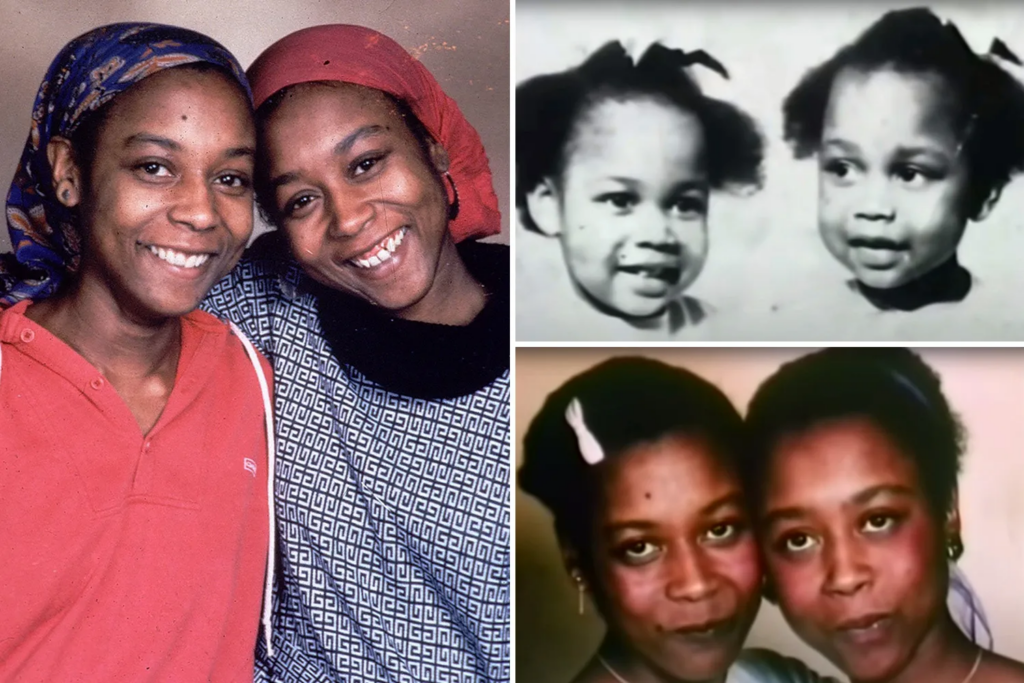
June and Jennifer Gibbons were identical twins, born in 1963 to Barbadian parents and raised in Wales. From early childhood, they shared a bond so intense that it shut the rest of the world out. They spoke almost exclusively to each other, communicating in a rapid, mirrored private language that linguists later described as a form of cryptophasia, a twin-only speech pattern.
To outsiders, it was unsettling. To teachers and classmates, it was frustrating. To bullies, it made them easy targets.
The twins were painfully shy, socially withdrawn, and often ridiculed for their accents, their silence, and their refusal to engage. Over time, their isolation deepened. Instead of adapting to the outside world, June and Jennifer retreated further inward, building a universe that only the two of them could access.
As teenagers, that isolation curdled into rebellion. They began committing petty crimes, vandalism, arson, theft acts that seemed less about criminal intent and more about desperation, a way to assert control in a world that had never made space for them. In 1981, they were declared mentally ill and sentenced not to prison, but to Broadmoor Hospital, a high-security psychiatric institution in England reserved for the most dangerous offenders.
They were just 18.
For the next 11 years, June and Jennifer lived behind locked doors, heavily medicated and surrounded by violent adult patients. They were the youngest inmates there. Doctors tried to separate them, believing their bond was pathological, but separation only made them worse. Together, they survived. Apart, they deteriorated.
Inside Broadmoor, the twins clung to writing as their only outlet. They filled notebooks with stories, poems, and diaries vivid, imaginative worlds full of passion, control, and freedom. Again and again, their writing returned to the same theme: escape.
They dreamed of a day when they would be released to a lower-security unit, where they could finally live something resembling a normal life.
That day eventually came.
In 1993, the twins were approved for transfer out of Broadmoor to a less restrictive psychiatric hospital. It was the moment they had waited for since adolescence. But just before the move, Jennifer said something that chilled everyone who heard it.
“I think I’m going to die,” she told June.
There was no visible illness. No warning signs. Just certainty.
On the day of the transfer, as they traveled together, Jennifer suddenly collapsed. She was pronounced dead shortly afterward. The official cause was acute myocarditis and sudden inflammation of the heart. No drugs. No poison. No clear explanation.
She was 29 years old.
June later said she believed the truth was simpler and stranger: that Jennifer had chosen to die so June could finally live freely. After her sister’s death, June began speaking to others for the first time in her life. Slowly, she reentered the world Jennifer had always shielded her from.
Today, June lives quietly, carrying a story that remains unsettling and unresolved.
The tale of the Gibbons twins is not just about tragedy or mental illness. It’s about what happens when difference is punished instead of understood and how love, when it becomes the only refuge, can also become a prison.
Jennifer’s final words still echo, suspended between fate, choice, and mystery.
RARE BIRTH Woman, 19, gives birth to twins by TWO fathers after having sex with both of them on same day.
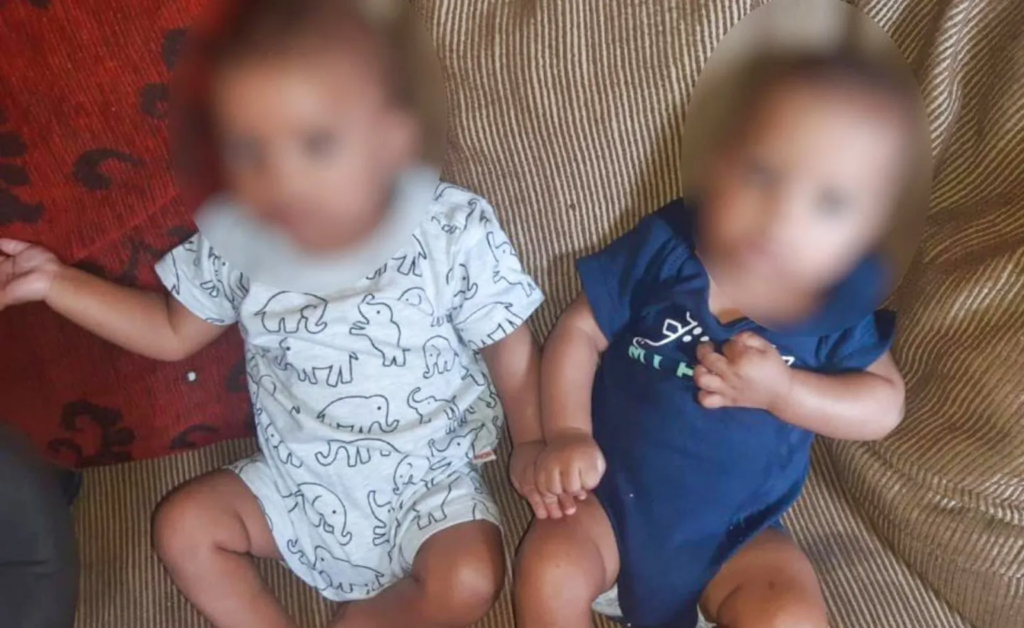
A 19-year-old woman in Portugal made medical history when she gave birth to twin boys fathered by two different men, a phenomenon so rare that doctors estimated it occurs only once in a million pregnancies. This extraordinary event, known scientifically as heteropaternal superfecundation, left both the mother and her healthcare team “surprised.”
The unnamed woman from southwest Goiás had a smooth pregnancy, according to her physician, Doctor Túlio Franco. Both babies were born healthy and showed no health problems. Despite the unusual circumstances, the birth itself went without complication, leaving only questions of paternity to resolve. The mother underwent testing, and one of the fathers had to take a separate paternity test to confirm the biological relationship.
Heteropaternal superfecundation can occur in two ways. In one scenario, a woman has sex with two men shortly before ovulation. If two eggs are released and sperm from both partners are present in the fallopian tubes, each egg can be fertilized by a different man. The second scenario occurs if a woman has sex with two men after ovulation, with sperm from each fertilizing separate eggs. In either case, the result is twins with different fathers, a phenomenon that has been documented fewer than twenty times worldwide.
Doctor Franco described the case as “extremely rare” and noted that he had never imagined witnessing it in his career. Despite the scientific curiosity, the mother expressed surprise herself, saying she had not known such a thing could happen.
The twins’ birth has sparked widespread interest not only for its rarity but also because it challenges common assumptions about twin pregnancies. While identical twins are always genetically identical, fraternal twins usually share only maternal DNA. Heteropaternal superfecundation takes fraternal twinning one step further, giving each twin a separate paternal lineage.
Medics emphasize that the condition is harmless in terms of infant health. In this case, both babies were healthy at birth and had no complications, reinforcing that superfecundation affects genetics rather than general wellbeing.
Cases like these are extremely rare. Globally, there have been fewer than twenty documented occurrences, and each draws attention from both scientists and the public. For the families involved, such events can be a surprise but also a reminder of the incredible complexity of human biology.
In Portugal, the story has attracted attention both for its novelty and the healthy outcome of the twins. While rare, it is a documented and natural occurrence, showing how the timing of ovulation and conception can sometimes produce astonishing results.
This one-in-a-million birth highlights the fascinating unpredictability of human reproduction and provides an extraordinary example of the rare genetic circumstances that occasionally arise, making it a medical and social story that will be remembered for years to come.
For 24 years, he rode 500,000 km across 20+ provinces until a DNA match reunited him with his son.
In 1997, Guo Gangtang’s life was shattered when his 2-year-old son was kidnapped in China. Like any parent, he was desperate, but unlike most, he refused to leave the search to authorities alone. What followed was an extraordinary tale of persistence, love, and resilience that would span nearly a quarter-century.
Guo set out on a journey unlike any other. He traveled over 500,000 kilometers across China on a motorcycle, following every lead, clue, and rumor he could find about his missing son. Along the way, he endured accidents that could have ended his quest, was robbed multiple times, and faced extreme weather and harsh terrain. Yet he pressed on, fueled by the unwavering hope of reuniting with his child.
His story became widely known and eventually inspired the 2014 film Lost and Love, which dramatized his relentless search and brought international attention to the issue of child abduction in China. While the film highlighted his struggle, the real-life dedication of Guo was even more remarkable.
Over the course of his journey, Guo’s determination not only focused on his own family but helped others. His persistence and use of modern tools such as DNA testing enabled him to assist in reuniting seven other families with their missing children. In a sense, his grief and effort created hope for dozens, if not hundreds, of people affected by similar tragedies.
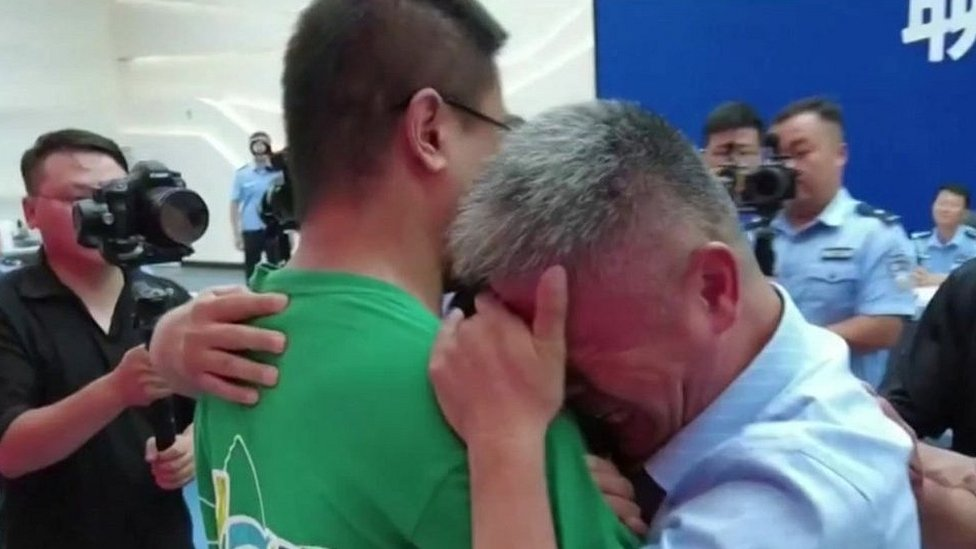
Finally, in 2021, after 24 years of tireless searching, a DNA match confirmed what he had long prayed for: his son, now grown and working as a teacher, was found. The reunion was emotional, a testament to a father’s relentless love and patience. After more than two decades, Guo’s journey reached its long-awaited conclusion, proving that even the longest roads can lead to hope.
Guo Gangtang’s story resonates far beyond China. It highlights the power of determination and the lengths a parent will go to protect and reclaim their child. His odyssey underscores the human capacity for perseverance, the importance of family bonds, and the difference one committed individual can make in the lives of many.
From the heartbreak of abduction to the joy of reunion, and the lives touched along the way, Guo’s 24-year journey reminds the world that some searches are worth every mile traveled, every hardship endured, and every moment of uncertainty. It is a story of love, resilience, and the enduring hope that can bridge decades and distance.
Shy, anxious cheetahs are often paired with calm dogs in zoos to help them feel secure.
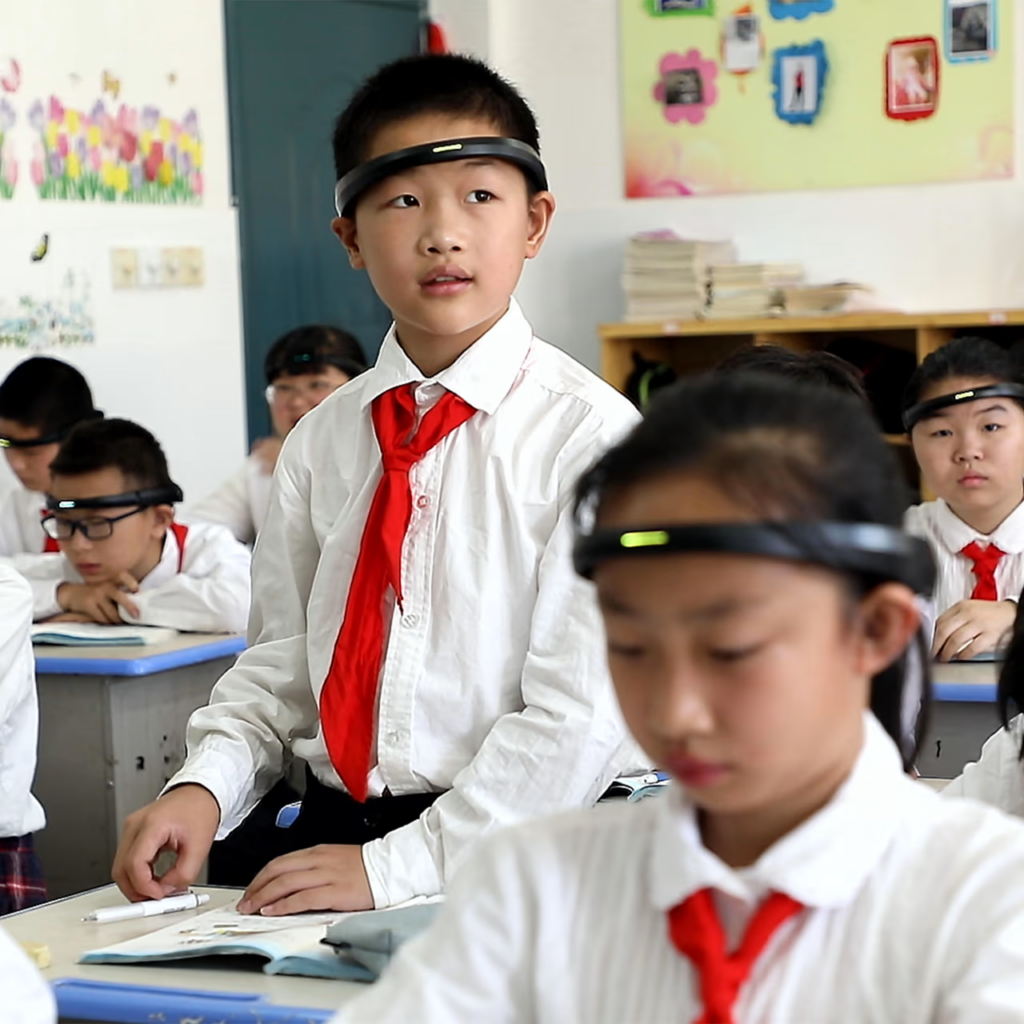
In a major move to prepare the next generation for a technology-driven world, Beijing schools will introduce mandatory artificial intelligence (AI) lessons for students starting in September 2025. The initiative will apply to children as young as six, marking one of the first large-scale efforts to integrate AI literacy into early education.
Each school year, students will be required to receive at least eight hours of AI instruction. These lessons may take the form of dedicated classes or be embedded into existing subjects such as science, mathematics, and information technology. The approach is designed to introduce AI concepts in a manner appropriate to students’ developmental stages.
For younger children, the focus will be on hands-on activities that teach the basics of AI through interactive, playful experiences. For example, they may explore simple algorithms, pattern recognition, or problem-solving exercises using AI-enabled tools. Older students, on the other hand, will engage in more complex applications, including data analysis, machine learning concepts, and innovative projects that integrate AI into research or real-world solutions.
The initiative reflects China’s broader education reform, which emphasizes preparing students with skills needed for the future workforce, encouraging creativity, and promoting technological literacy from an early age. By embedding AI education into the curriculum, policymakers aim to cultivate students who can think critically about technology, understand its potential and limitations, and apply it responsibly in diverse fields.
Experts suggest that early exposure to AI can provide a foundation for lifelong learning in emerging technologies, equipping students with competencies that extend beyond coding or programming. The program also seeks to nurture innovation, problem-solving abilities, and interdisciplinary thinking qualities considered essential for future scientific, industrial, and entrepreneurial development.
The move aligns with China’s broader national strategy to strengthen its global position in AI and technology. By investing in education that builds AI literacy from primary school onward, the country hopes to create a generation of citizens and professionals capable of leading in AI research, development, and ethical application.
While the program is ambitious, educators are emphasizing the importance of age-appropriate learning and careful curriculum design to ensure that children grasp AI concepts without being overwhelmed. Pilot programs and teacher training are expected to accompany the rollout to support effective implementation.
In summary, Beijing’s new AI education mandate represents a pioneering step toward integrating technology into foundational learning. By combining hands-on activities for younger children with applied AI projects for older students, the initiative aims to equip students with critical skills, foster creativity, and position China at the forefront of global AI education.
Legendary astronaut Sunita Williams has officially retired after a 27-year career.
Over the course of her career, Williams completed three space missions, accumulating a total of 608 days in orbit the second-most time spent in space by any NASA astronaut. She also holds the women’s record for cumulative spacewalk time, spending more than 62 hours outside the International Space Station (ISS) performing critical maintenance, upgrades, and experiments. These achievements not only highlight her technical expertise but also her resilience under demanding and unpredictable conditions.
One of the most notable moments of Williams’ career came during an extended stay aboard the ISS when she and her crew faced unexpected mission extensions. Williams demonstrated leadership, adaptability, and calm under pressure, setting a standard for astronauts operating in the harsh and isolated environment of space. Her professionalism during such challenges reinforced NASA’s operational capabilities and underscored the importance of preparation, teamwork, and problem-solving at extraordinary levels of complexity.
Throughout her tenure, Williams also played a key role in mentoring younger astronauts and shaping NASA’s culture of excellence. Her leadership extended beyond technical performance; she served as a role model for women in STEM and aspiring astronauts worldwide. From public outreach to speaking engagements, she actively encouraged students, especially girls, to pursue careers in science, technology, engineering, and mathematics, making her impact felt both on Earth and in orbit.
Williams’ career is marked not only by individual accolades but also by contributions to the broader goals of human space exploration. Her missions advanced scientific research aboard the ISS, supported international cooperation in spaceflight, and helped pave the way for future exploration, including upcoming lunar and Mars missions.
As she steps away from NASA, Williams leaves behind a record of perseverance, achievement, and leadership. Her career reminds the world of the extraordinary capabilities of astronauts, the value of teamwork in extreme conditions, and the inspiration that comes from pushing boundaries beyond our planet.
Sunita Williams’ retirement closes a chapter in NASA history but also highlights the ongoing story of human spaceflight. With 608 days in orbit, record-setting spacewalks, and decades of service, her legacy will continue to influence NASA operations, astronaut training, and the dreams of future explorers for years to come.
Her journey proves that dedication, skill, and courage can take humanity to remarkable heights and that the sky is never the limit.
Motorcycle Accident Leaves Father Fighting for Recovery Brandon Faces Long Road Back to Health After Severe Injuries
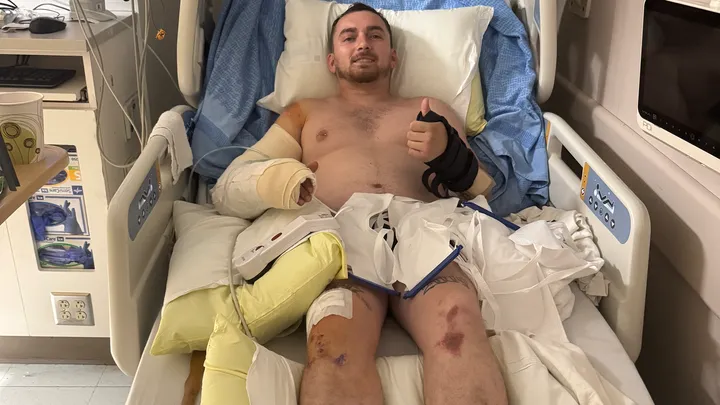
This past Thursday, Brandon was involved in a serious motorcycle accident that has left him with multiple severe injuries. He sustained a broken wrist, a fractured wrist, two fractured ankles, a fractured knee, and a broken elbow that required surgery. The extent of his injuries means he faces a long and challenging recovery, both physically and financially.
Brandon is not only recovering from the trauma of the accident itself, but he is also a devoted father to three young boys. His children depend on him for care, guidance, and daily support, a responsibility that now adds emotional weight to his recovery. Being unable to work during this time has made the situation even more difficult, as everyday expenses like rent, groceries, and bills continue to accumulate alongside significant medical costs.
In addition to the immediate financial burden of surgeries, hospital stays, medications, and follow-up care, Brandon will face ongoing rehabilitation and physical therapy to regain mobility and strength. Recovering from multiple fractures, particularly in both wrists, ankles, and a knee, is a slow process that requires patience, professional care, and a strong support network. Each step of the journey from hospital discharge to therapy sessions will take time, effort, and resources.
Friends, family, and community members are rallying around Brandon to help him through this difficult period. Support can come in many forms: emotional encouragement, practical assistance with daily tasks, and financial contributions to help cover medical and living expenses. The goal is to give Brandon the stability and care he needs to focus on healing while ensuring his boys continue to have the support of their father.
While the road ahead is uncertain, Brandon’s dedication to his family and determination to recover remain clear. With proper medical care, rehabilitation, and support from loved ones, he has the potential to regain his health and return to the life he had before the accident.
This situation is a reminder of the fragility of life and the importance of community support in times of crisis. Brandon’s family, particularly his three children, needs him home, healthy, and whole. By coming together to assist with medical and daily living expenses, friends, neighbors, and supporters can help ensure that Brandon has the resources necessary to focus fully on his recovery.
Brandon’s story is one of resilience, love, and the need for support in unexpected circumstances. His journey to recovery may be long, but with care, patience, and assistance from those around him, he can look forward to returning to his family and rebuilding his life.
A Miracle Born at 23 Weeks A Tiny Fighter’s Journey Through the NICU.
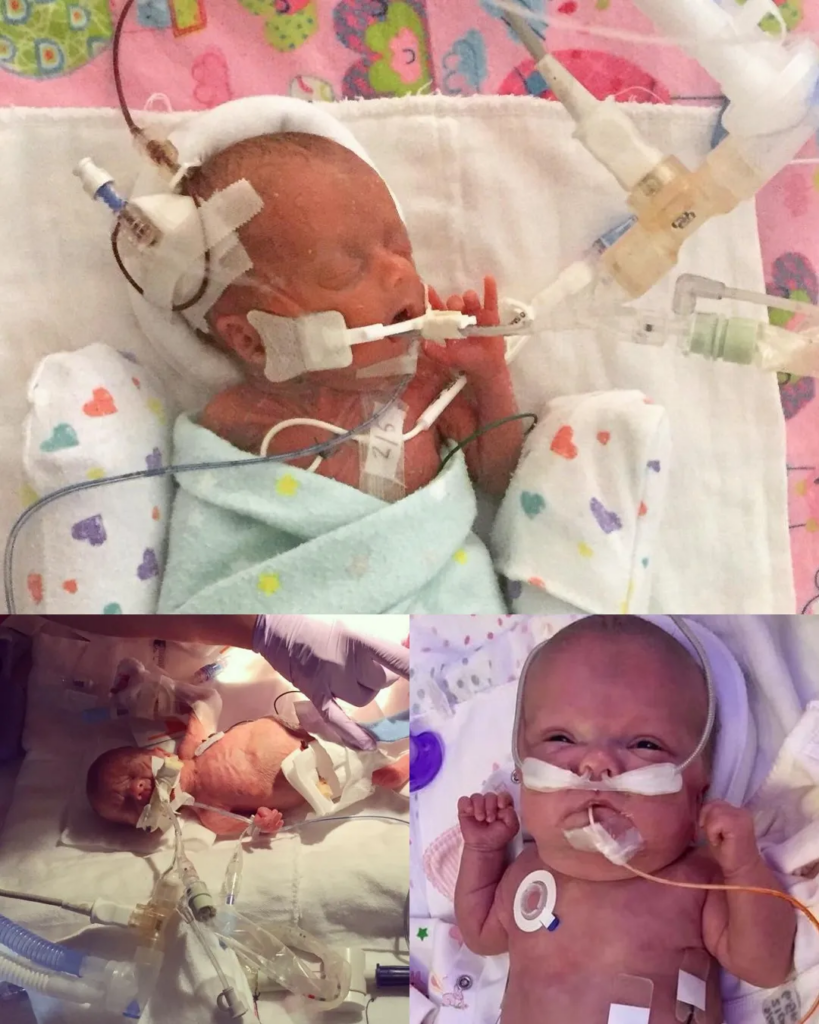
Grace did not enter the world gently. Born at just 23 weeks, she arrived in urgency, in motion, in a way that left her parents grappling with fear and uncertainty. Weighing only one pound, her body seemed almost unreal, too fragile to survive outside the womb. For her mother, Mary Parkins, the moment of birth was not filled with celebration, but with confusion and the realization that everything she had envisioned for motherhood no longer applied.
Babies born this early exist in a space between hope and uncertainty. Their bodies are still developing, their lungs not yet capable of sustaining life on their own, and every organ is learning to function in a world it was never meant to face so soon. Grace was no exception. Immediately after birth, she was transferred to the neonatal intensive care unit (NICU), surrounded by machines far larger than her tiny frame.
Tubes delivered air she could not yet breathe independently. Monitors recorded heartbeats so small they barely registered, yet every number carried immense weight. Time in the NICU is strange: minutes stretch endlessly, while weeks can vanish before you notice. Each day began with Mary asking herself the same silent question: “Is she still alive?” Each night ended with the same ritual: a brief, precious touch through the incubator walls before walking away, knowing she had to leave her child behind to survive the next night.
Grace’s early days were defined by fragility and resilience in equal measure. Setbacks came suddenly. One of the most frightening was the discovery of a perforated bowel, requiring emergency surgery, a procedure with no guarantees. Yet, Grace endured, her body withstanding challenges that would overwhelm most adults, while her parents clung to every small sign of progress.
Mary learned a new form of motherhood behind plastic walls, communicating love through gloves, whispered updates, and careful observation. Each procedure, each monitor reading, each fragile breath was a testament to Grace’s determination to survive. Days of hope were interspersed with moments of fear, as doctors provided measured optimism and parents navigated the uncertainty of every hour.
Through countless interventions and surgeries, Grace’s tiny body began to grow stronger. Her journey in the NICU was not just a battle for life, but a test of endurance, love, and patience for her family. Every milestone, a slight weight gain, a stable heartbeat, a successful procedure became a victory.
Grace’s story is a reminder of the fragility and strength of life. Born before the world expected her, she fought against impossible odds. Her parents’ love, unwavering despite fear and uncertainty, and her own resilience created a narrative of hope amid the harsh realities of premature birth. Grace’s earliest days were not gentle, but they were the first chapters of a life defined by courage, perseverance, and the quiet miracles that unfold in the NICU.
Leave a Comment