

WOMAN SPENDS HER SON’S HEART SURGERY MONEY ON BEYONCÉ CONCERT, HUSBAND FILES FOR DIVORCE.

What was meant to be a life-saving fund for a child’s critical heart surgery became the center of a public scandal when a woman allegedly spent the money on a Beyoncé concert. According to multiple reports, the choice sparked not only social media outrage but also irreparably damaged her marriage, ultimately resulting in her husband filing for divorce.
The controversy centers on a family whose young son requires urgent heart surgery, a procedure that comes with significant medical costs. Instead of prioritizing her son’s health, sources claim the mother redirected the funds to secure premium tickets for a major Beyoncé performance, an act that critics have described as “irresponsible” and “shocking.”
Social media users were quick to react, with many calling her actions selfish and immoral. The story has prompted debates about parental responsibility, financial ethics, and the lengths people go for entertainment. While some argue that personal freedom matters, the majority have criticized the decision as a betrayal of trust both to the child in need and to her spouse.
The timing of the purchase added fuel to the fire. The concert tickets were reportedly bought while the boy’s surgery was imminent, intensifying outrage. Friends and family have reportedly expressed disbelief that such a decision could take precedence over a child’s life, emphasizing the gravity of the situation.
According to reports, the mother’s husband discovered the expenditure and immediately filed for divorce, citing a breach of trust and failure to prioritize the family’s wellbeing. The financial decision reportedly represented a breaking point after ongoing marital stress, highlighting how one critical choice can have far-reaching consequences.
While the mother has not publicly commented, legal experts say the case raises questions about financial responsibility, guardianship, and whether misuse of funds allocated for medical care could carry legal implications.
This shocking story serves as a cautionary tale about priorities, accountability, and the potential fallout from reckless financial decisions. It also illustrates the intense scrutiny public figures and private citizens alike face when personal choices intersect with perceived moral obligations.
As the divorce proceedings unfold, the family’s focus remains on securing care for the child and navigating the consequences of the controversial decision. Meanwhile, the incident has captured national attention, highlighting how a single choice can ripple across personal relationships and social perception.
Ultimately, the case is a stark reminder that actions taken in a moment of impulse can have long-lasting impacts on a marriage, a child’s future, and public opinion.
ARRESTED FOR A COLLEGE S*XUAL BATTERY, HE WAS CAUGHT ON VIDEO GROPING A DETECTIVE DURING HIS ARREST.
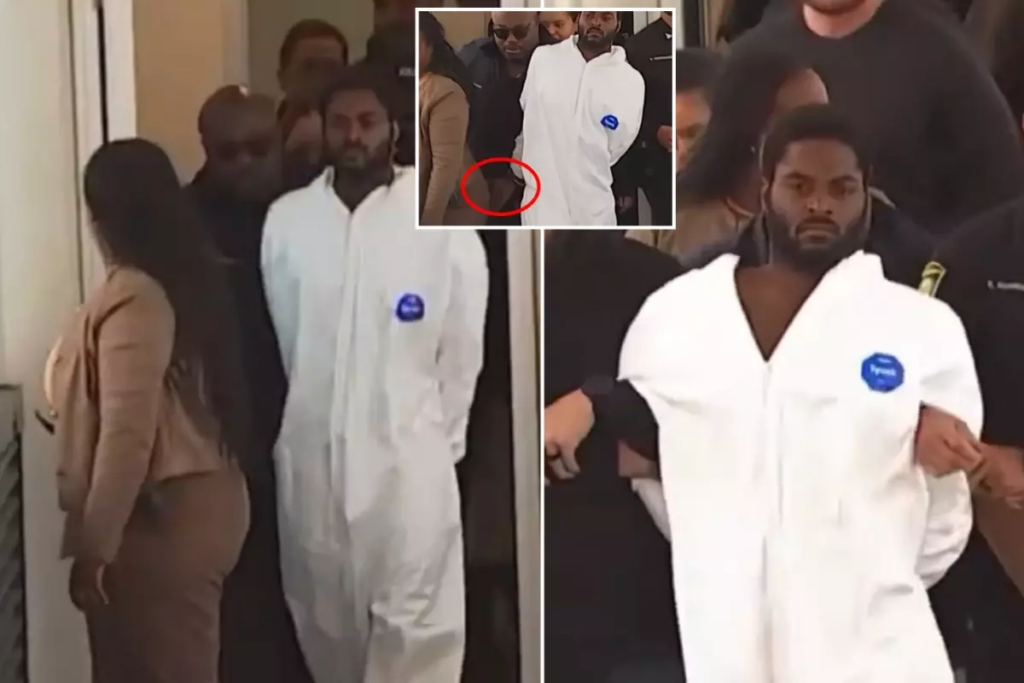
A 30-year-old man was taken into custody in Florida following a sexual battery incident at Florida Memorial University, according to police reports. Authorities say DNA evidence connected him directly to the alleged crime, which involved a student on campus. Surveillance footage reportedly shows the suspect jumping over a campus fence shortly before the attack, raising questions about campus security and the circumstances leading to the incident.
The suspect, whose name has not been publicly released, was recently released from prison and has a prior criminal record, including convictions for lewd and lascivious conduct. This history prompted authorities to warn the campus community about potential risks and the importance of reporting any suspicious behavior.
During the arrest process, video footage captured a disturbing act: the man allegedly groped the lead detective by grabbing her buttocks while she held a door. Law enforcement officials have confirmed the behavior occurred and say it will factor into additional charges. The incident has drawn attention to both the seriousness of sexual assault cases and the risks law enforcement officers face in the line of duty.
Following the arrest, a judge set the suspect’s bond at $500,000. He was ordered not to contact the victim and was barred from the university campus. As of the latest updates, he remains in custody because the bond has not been posted. Authorities continue to investigate and are urging anyone who may have additional information or who may be another victim to come forward immediately.
The arrest highlights ongoing concerns about campus safety, particularly involving individuals with prior criminal convictions. Florida Memorial University officials are cooperating fully with law enforcement and say they are taking steps to ensure students feel safe. Counseling and support services have reportedly been made available to students affected by the incident.
Law enforcement officials stress that this is an active investigation, and the public is encouraged to provide any tips or leads. They remind the community that sexual assault and related crimes are taken seriously, and all reports will be investigated thoroughly. Authorities also warn that additional victims may exist, and anyone with knowledge of related incidents should contact local police.
This case serves as a stark reminder of the ongoing need for vigilance on college campuses and the importance of swift law enforcement response. It also raises questions about rehabilitation and monitoring for repeat offenders, particularly those with prior sexual misconduct convictions.
The combination of DNA evidence, video surveillance, and prior criminal history has allowed investigators to act quickly, preventing potential further harm and protecting the university community.
Pregnant Mom Brutally Stabbed 70 Times and Left in Burning Apartment After Facebook Marketplace Car Deal Turns Deadly.

A horrifying Facebook Marketplace transaction ended in tragedy when 30-year-old pregnant mom Eliza Morales was stabbed 70 times and left to die in a burning apartment in Downers Grove, Illinois, prosecutors say. The suspect, 19-year-old Nedas Revuckas, had arranged to pick up license plates and complete a car registration exchange but reportedly became enraged over the purchase.
Court documents and surveillance footage reveal chilling details of the attack. Revuckas arrived at the home around 5:30 p.m., where Morales, five months pregnant, was alone. The teen was handed a screwdriver, and within minutes, the situation escalated violently. Video shows the apartment door opening and closing multiple times as the struggle intensified, with the door handle jiggling from the inside; authorities say it appeared someone was desperately trying to escape.
After stabbing Morales repeatedly, Revuckas allegedly set fire to the apartment, compounding the horror. Morales was pronounced dead at the scene. Investigators confirmed she was five months pregnant, adding the charge of intentional homicide of an unborn child to the growing list of allegations.
Revuckas was arrested and faces an array of felony charges, including first-degree murder, armed robbery, aggravated arson, and aggravated cruelty to animals. Police have highlighted the extreme nature of the attack and the deliberate targeting of Morales, who had done nothing to provoke such violence beyond selling a car.
The case has shocked the suburban Chicago community. Friends and neighbors described Morales as a loving mother who had an 18-month-old daughter and was expecting her second child. “She was always thinking about others,” one neighbor told local media. Authorities are reviewing whether there could be additional victims or motives beyond the failed car deal.
Legal experts have pointed to the unprecedented brutality of the attack and the public nature of the crime as evidence prosecutors are likely to seek the harshest penalties. The teen’s prior record, if any, and mental state will be closely scrutinized during upcoming proceedings.
Downers Grove police are urging anyone with information about the incident or possible prior contact with the suspect to come forward immediately. The community continues to reel from the shocking combination of violence and arson, which turned a routine online transaction into a deadly nightmare.
The Morales family is devastated, mourning both Eliza and the unborn child she carried. They have asked for privacy while processing the tragedy, and local officials have offered support services to the family and residents affected by the horrific crime.
The case serves as a stark warning about the risks of online marketplaces, highlighting that what seems like a simple exchange can spiral into fatal violence. Law enforcement continues to investigate all aspects of the attack to prevent similar tragedies in the future.
DEPRESSED, HE MOVED TO VEGAS AND FOUND A NEW LIFE IMPERSONATING ALAN FROM ‘HANGOVER’, EARNING $250,000 A YEAR TO PARTY PROFESSIONALLY.
Thaddeus Kalinoski never imagined a painful divorce and job loss would lead to a life-altering moment in the mirror of a Las Vegas hotel bathroom.
Once a meticulous hotel manager, Kalinoski’s life unraveled when his marriage ended and he was unexpectedly let go from work. The emotional toll was immediate: he stopped caring about his appearance, gained weight, grew a wild beard, and dressed without any sense of style. Days blurred together as depression took hold.
“I felt invisible, like the world had no reason for me anymore,” Kalinoski recalls. But one ordinary morning, standing in front of the mirror, he noticed something strange. The more he embraced his messy appearance, the more he resembled Alan, the awkward and hilariously unpredictable character played by Zach Galifianakis in The Hangover.
The realization hit him like a lightning bolt. “I couldn’t stop laughing,” he says. “I looked ridiculous, but in a way that made me feel alive again. I felt like I’d found a mask that let me be myself without worrying what anyone thought.”
Embracing his newfound resemblance, Kalinoski leaned into the humor. He started dressing like Alan, recreating the character’s iconic outfits, and posting funny photos online. The response was overwhelming. Friends and strangers alike encouraged him, turning what began as a personal joke into a viral sensation.
What started as a coping mechanism became a catalyst for change. Inspired by the laughter and attention, Kalinoski gradually began taking small steps to rebuild his life. He joined improv classes, worked on his confidence, and even found a new job in hospitality, this time in a creative role where his quirky sense of humor was an asset rather than a liability.
“I realized that sometimes life forces you into the strangest detours to find yourself,” Kalinoski says. “If I hadn’t looked like Alan, I might still be stuck in that dark place. It gave me permission to laugh, to move forward, and to embrace my weirdness.”
Now, Kalinoski credits Las Vegas and a little Hollywood magic for saving him. The city that never sleeps became the backdrop for a personal transformation, proving that sometimes the road to healing comes with a sense of humor and maybe a little facial hair.
Today, he’s healthier, happier, and actively encourages others facing depression to find unexpected ways to reconnect with themselves, even if it means laughing at your own reflection first.
Darius McCollum, a New Yorker with Asperger’s/autism, has been arrested 30+ times for impersonating transit workers and illegally driving buses and subway trains out of obsessive fascination with the system.
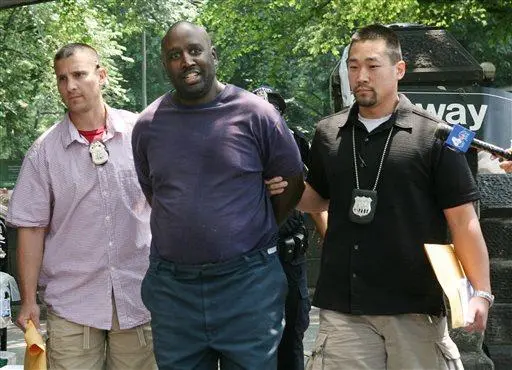
Darius McCollum’s life story has captured public fascination and controversy as a singular example of how the criminal justice system grapples with neurodivergence, obsession, and public safety. Born in 1965 and raised in Queens, New York, McCollum displayed an intense fixation on trains and buses from a very young age. By the age of eight, he had reportedly memorized the entire New York City subway map and developed an encyclopedic knowledge of routes, signals, schedules, and operating procedures that rivaled and sometimes exceeded that of trained professionals.
McCollum’s obsession wasn’t merely academic; it translated into repeated real-world actions. During his teenage years, he befriended transit workers who taught him practical aspects of operating subway trains and buses. At age 15, he famously took control of a Manhattan subway train and drove it several stops without passengers realizing the operator was unauthorized
.
Over the following decades, he repeatedly impersonated MTA employees, donned uniforms, and took the controls of buses, commuter trains, and subway cars – sometimes even collecting fares, fixing tracks, or assisting passengers.
Law enforcement eventually caught up with McCollum, and his first arrest for unauthorized operation of a subway train came in 1981. Over the ensuing 35 years or more, he was arrested more than 30 times for similar transit-related offenses. In some instances, he reportedly drove stolen vehicles including a Greyhound bus while still following proper routes and schedules. Despite his competence behind the controls, his lack of authorization made such actions serious safety violations under the law.
McCollum’s repeated arrests and incarceration have highlighted the limitations of the criminal justice system in handling individuals with significant neurodevelopmental differences. For much of his life, he was not fully diagnosed with Asperger’s syndrome, a condition on the autism spectrum characterized by intense interests and challenges with social rules until his later arrests. Even after diagnosis, mental health advocacy has argued that incarceration rather than supportive treatment has dominated his legal outcomes. Critics assert that McCollum needed structured therapeutic intervention, vocational opportunities, and supervised engagement with his interests rather than repeated jail terms.
His story has generated media coverage, articles, plays, and a documentary titled Off the Rails: The Darius McCollum Story, which explores his lifelong struggle with obsession, identity, and the law. The film underscores the paradox of a man whose profound expertise and passion for public transit could have been an asset if channeled through legitimate means, yet whose inability to access conventional employment pathways due to his criminal record trapped him in a cycle of unauthorized, yet highly competent, impersonation.
McCollum’s case continues to be debated in public discourse as a poignant example of the need to rethink how mental health, especially autism spectrum conditions, is treated in legal and social systems balancing public safety with compassion, support, and alternative pathways to meaningful engagement.
JUST IN: PRESIDENT TRUMP TO ANNOUNCE NEW FED CHAIR TO REPLACE JEROME POWELL NEXT WEEK.

President Donald Trump has taken a major step toward reshaping U.S. monetary policy by nominating Kevin Warsh to succeed Jerome Powell as Chair of the Federal Reserve, a decision with implications for financial markets, interest rates, and the future independence of the central bank.
On January 30, 2026, Trump announced Warsh, a former Federal Reserve governor and current fellow at the Hoover Institution, as his choice for the country’s top central bank position. Warsh’s term at the Fed’s Board of Governors from 2006 to 2011 included key roles during the financial crisis, giving him significant institutional experience that both Wall Street and policymakers recognize.
Warsh’s nomination comes amid months of speculation and Trump’s increasing public criticism of Powell, whom he appointed in 2018. Trump has repeatedly said he wants lower interest rates labeling current levels “unacceptably high” and has openly questioned Powell’s leadership and policy choices. Although Powell’s term does not officially end until May 2026, Trump’s early move to name a successor reflects a political strategy to steer monetary policy direction well before that date.
Warsh is seen as a seasoned economist whose past positions have occasionally diverged from Trump’s call for aggressive rate cuts. Historically, he was considered a monetary “hawk” favoring tighter policy to control inflation. However, in recent years he has signaled support for lowering interest rates and reframing certain central bank priorities, aligning more with Trump’s goals. Analysts note that Warsh’s combination of Fed experience and recent economic commentary could ease market concerns about abrupt policy shifts, even as expectations build around potential rate reductions.
The nomination has already stirred political reactions. Some lawmakers, including Republican Senator Thom Tillis, have threatened to block Warsh’s confirmation until ongoing investigations involving Powell are resolved. Critics argue that Trump’s public pressure on the Fed and his choice of successor raise important questions about the institution’s long-standing independence from political influence. Supporters of Warsh counter that his experience and credibility could help navigate economic challenges and provide stability to markets.
Warsh’s nomination now heads to the Senate for confirmation, a process that could prove contentious given the political backdrop and ongoing debates over U.S. monetary strategy. Powell’s legacy especially in inflation management and balancing economic growth remains a central issue in public discourse as economic data continues to evolve.
Beyond leadership, markets have reacted to the nomination. Investors are digesting how Warsh’s economic philosophy might influence not just interest-rate paths but also the Fed’s balance sheet and communication strategy. Given the importance of the Federal Reserve in shaping global financial conditions, any change at the top has broad implications for borrowing costs, currencies, and investor sentiment.
In sum, Trump’s nomination of Kevin Warsh marks a pivotal moment for U.S. economic policy, testing the balance between executive influence and central bank independence while setting the stage for critical decisions on monetary policy direction in 2026 and beyond.
MRBEAST FUNDED 1,000 LIFE-CHANGING SURGERIES FOR PEOPLE WHO’D BEEN WAITING FOR YEARS-SIMPLY BECAUSE THEY COULDN’T AFFORD TREATMENT.
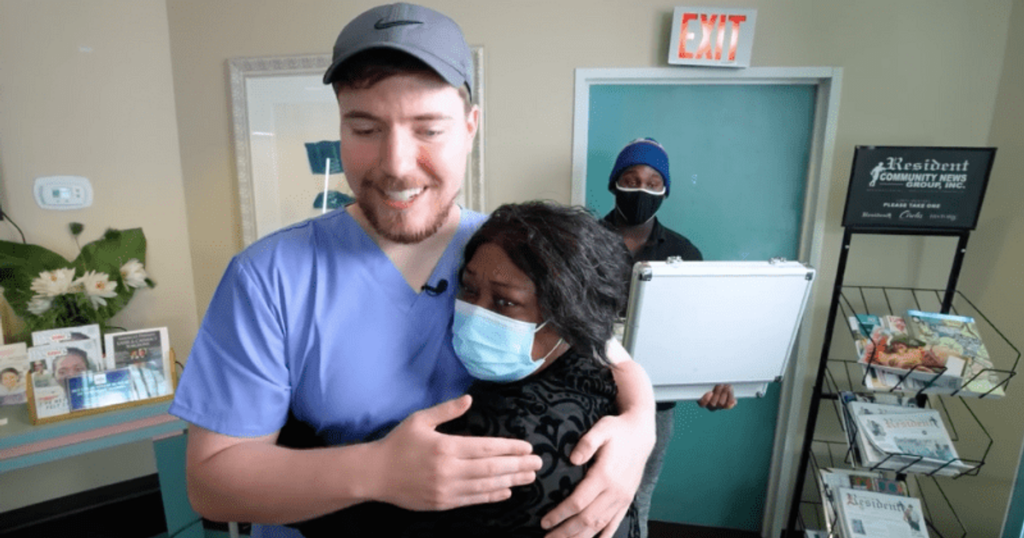
American YouTuber Jimmy “MrBeast” Donaldson and his charity arm, Beast Philanthropy, recently completed a major medical aid mission in Kenya that helped 1,000 people receive surgeries they otherwise couldn’t afford or access.
In a video published on January 25, 2026 titled “1,000 People Get Life Changing Surgery,” MrBeast and his team documented their work with local doctors and surgical teams at facilities including Baraka Hospital in Narok County’s Maasai Mara region. Many of the procedures were cataract surgeries, often lasting only 10–15 minutes, that restored vision for patients who had been living with impaired sight for years. Others received operations for conditions like thyroid issues, hernias, and other longstanding ailments that had severely affected their quality of life but went untreated due to cost or lack of access.
A key emotional highlight from the video came when MrBeast asked a nurse how many of the scheduled surgeries would have happened without the project’s publicity. Her blunt reply “None” highlighted the stark reality that many patients had no viable path to obtain essential care without the intervention and attention brought by this initiative.
One beneficiary spotlighted in media coverage was a Kenyan woman known as Mama Jane, who lived with a thyroid condition for more than two decades. After her surgery, she regained strength and returned to daily activities like cooking and caring for her family, a transformation her community celebrated. Other patients included individuals whose sight had deteriorated so much that they were unable to work or support themselves until their vision was restored.
The initiative set up several surgical camps and worked with hospitals across multiple regions including Narok, Kisumu, Homa Bay, and Nairobi to reach patients in remote and underserved areas. Beast Philanthropy’s team also arranged transport, equipment, and medical supplies to ensure surgeries could be performed safely and efficiently.
While MrBeast’s philanthropic work has drawn praise for its scale and impact, it exists at the intersection of charity and content creation. The visibility of these projects helps raise awareness about global healthcare inequities showcasing how relatively short, low-cost procedures can dramatically change lives when funding and logistics are available.
MrBeast’s involvement in Kenya reflects a broader pattern in his recent charity efforts, which have included funding water projects, supporting conservation efforts, and other community initiatives aimed at improving living conditions in parts of Africa and beyond
Overall, this 1,000-surgery campaign stands out as one of Beast Philanthropy’s most ambitious medical aid efforts. It not only provided immediate, tangible benefits to hundreds of families but also highlighted persistent barriers to basic healthcare faced by many in rural Kenya, barriers that could be overcome if more resources and attention were directed toward underserved communities.
Parents donate their son’s organs after an overdose; years later, they meet recipient Erv Basdon and hear Matthew’s heart still beating in him.
Michael and Barbara Shetterly from Essex, Maryland, lived an ordinary life until April 18, 2014 Good Friday when their 23-year-old son, Matthew Shetterly, died suddenly from a heroin overdose. The shock of his death was compounded by the numbness and confusion that follows such a devastating loss. Amid that grief, hospital staff posed an unimaginable question: Would they donate Matthew’s organs? After a painful and heartbreaking decision, they said yes.
Matthew’s organs went to several patients in need, but the most striking story came from his heart transplant. Matthew’s heart was rushed to Fairfax, Virginia, where a man named Erv Basdon, suffering from severe heart failure and facing his own mortality, received it on Easter Sunday — just two days after Matthew’s death. For Erv, the transplant wasn’t just surgery. It was life itself. For the Shetterlys, it was a source of profound emotional conflict: in giving life to another, they were forced to confront the reality of their son’s absence.
In the years that followed, the Shetterlys struggled with their grief. The pain was raw and ever-present, and any connection to Matthew after his death, even one that saved another life was agonizing. For nearly two years, the idea of meeting Erv was too much to bear. They were still processing the loss of their son, and each reminder of him was sharp, immediate, and painful. The emotional distance between donor family and recipient remained intact, illustrating how organ donation can be both a gift and a deeply sensitive human experience.
Eventually, with support from the Living Legacy Foundation, an organization that facilitates connections between donor families and organ recipients, the Shetterlys agreed to meet Erv in person at the foundation’s office in Baltimore. That moment was laden with tension, hope, sadness, and possibility. Slowly, with trembling hands, Michael and Barbara placed a stethoscope on Erv’s chest. In that instant, they heard it: Matthew’s heart beating inside him. For Michael, it was an overwhelming reminder of the son he had tried to save moments before his death; for Barbara, it was an affirmation that a piece of Matthew still lived on in the world.
The encounter between the Shetterlys and Erv encapsulates the complex emotional terrain of organ donation — where loss intersects with hope, grief is paired with gratitude, and a heart that stopped can beat again in another body. Erv carries Matthew’s heart with him every day, a reminder that one life’s end became another’s new beginning. Through their courage to say “yes” in the darkest hour, the Shetterlys transformed unimaginable pain into a profound legacy.
This story not only highlights the lifesaving impact of organ donation but also the compassionate bridges it can build between donor families and recipients honoring both memory and second chances.
RIGHT BEFORE A 3-HOUR LIVE SHOW, THIS PREGNANT NEWS ANCHOR WENT INTO LABOR, FINISHED THE BROADCAST, THEN WELCOMED A HEALTHY BABY BOY.
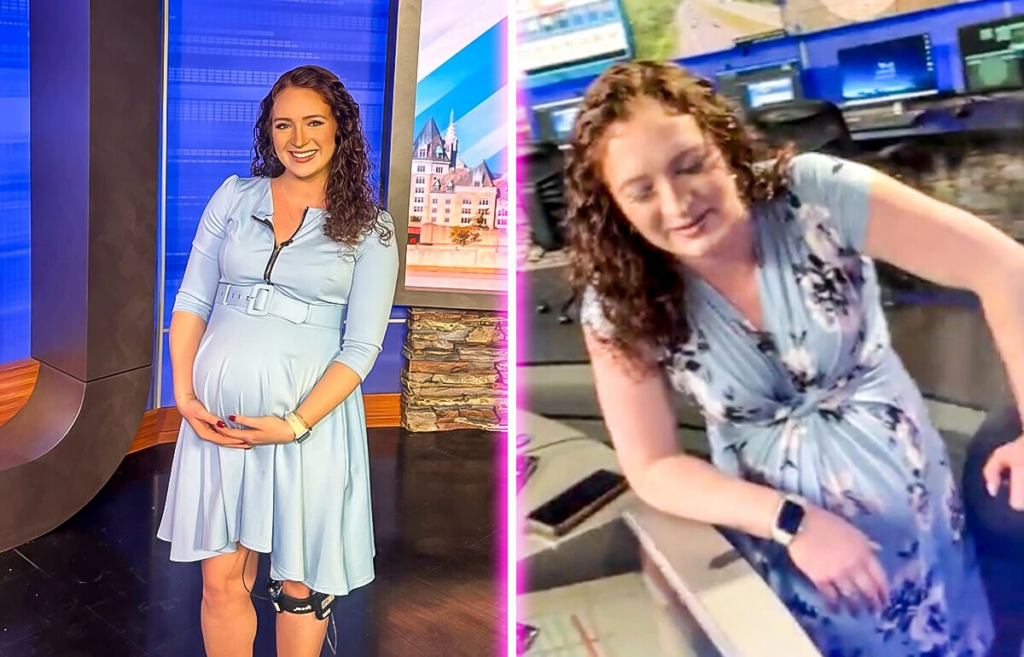
For CBS6 morning anchor Olivia Jaquith, one workday in New York’s Capital Region became a story that viewers and coworkers will never forget. It was around 4:15 a.m. in the Albany-area newsroom when Olivia experienced a moment that typically signals an immediate trip to the hospital: her water broke. Already two days past her due date and officially in early labor, she was facing a choice few people ever imagined making.
Most would have understandably rushed out the door, but Olivia paused, took a breath, and spoke with her team. After assessing how she felt and knowing medical care was close by, she made the remarkable decision to stay and anchor the entire three-hour morning broadcast.
What followed was a powerful mix of professionalism, humor, and teamwork. Olivia delivered the news as usual, calmly reading scripts and engaging viewers all while quietly managing contractions. Between segments, she joked with her coworkers, keeping the mood light and reassuring everyone watching that she was okay.
The CBS6 team embraced the moment with warmth and creativity. Playful on-screen graphics appeared during the broadcast, including a red banner noting “Days past due date: 2,” turning a potentially tense situation into a shared, human experience for viewers. Her co-anchor, Julia Dunn who was also pregnant played a key role throughout the morning, helping time Olivia’s contractions off-camera and offering steady support on set.
Rather than distracting from the broadcast, the moment highlighted the strength of a newsroom built on trust and collaboration. Viewers at home watched not just a news show, but a real-life display of resilience and camaraderie unfolding live on air.
Only after the show wrapped did Olivia finally head to the hospital. Not long afterward, she and her husband, Tyn, welcomed a healthy baby boy named Quincy. Both mother and baby were reported to be doing well.
For those familiar with Olivia’s track record, her choice wasn’t entirely surprising. She previously made headlines for running a half-marathon while pregnant, another example of her determination and grit. Anchoring live television while in labor simply added another extraordinary chapter to her story.
Olivia Jaquith’s unforgettable morning wasn’t just about pushing through discomfort; it was about confidence, preparation, and trusting the people around her. In an industry built on delivering the news under pressure, she embodied what it means to stay calm when it matters most, proving that sometimes, the most powerful stories happen behind the desk.
IN NEPAL, ONE SURGEON HELPED 100,000+ POOR PATIENTS SEE AGAIN WITH FREE OR LOW-COST SURGERY-PROVING A SCALPEL CAN CHANGE A FUTURE.
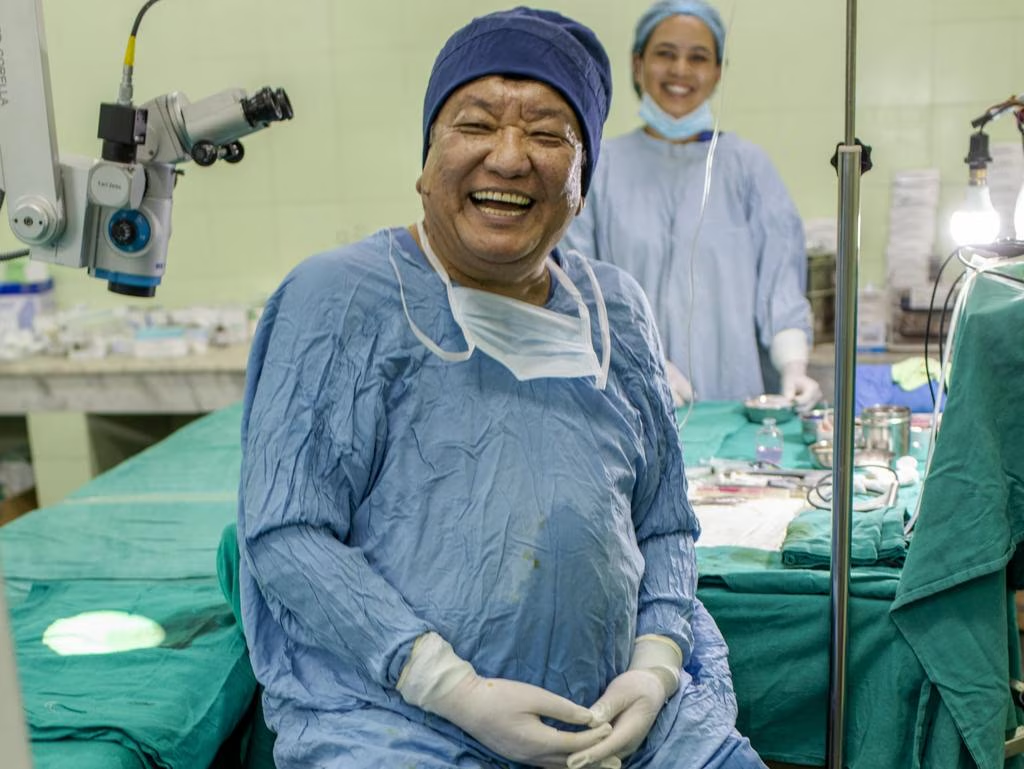
Dr. Sanduk Ruit, widely known as the “God of Sight,” is one of the most remarkable medical humanitarians of our time. Born in a small, remote village in the Himalayas of Nepal, he grew up in a place where access to basic healthcare, especially eye care, was almost nonexistent. In his early years, blindness from cataracts was common and devastating, often condemning people to lives of dependency and poverty.
Rather than accepting this reality, Dr. Ruit chose to challenge it.
As he trained to become an eye surgeon, he recognized a harsh truth: cataract surgery, though routine in wealthy countries, was far too expensive and inaccessible for poor communities. The artificial lenses used in surgery often cost more than $100, making treatment impossible for most patients in developing regions. Instead of lowering his expectations, Dr. Ruit set out to change the system itself.
Working alongside his team, he helped redesign cataract surgery to make it faster, safer, and dramatically more affordable without sacrificing quality. One of his most groundbreaking contributions was the development of a high-quality intraocular lens that could be manufactured locally for under $5. This single innovation shattered the cost barrier that had kept millions blind.
Dr. Ruit didn’t stop at innovation he built infrastructure for lasting change. In 1994, he co-founded the Tilganga Institute of Ophthalmology in Kathmandu, which became a center for affordable eye care, training, and research. Through this institution and later through what is now known as the Cure Blindness Project, his methods spread far beyond Nepal.
Over the years, Dr. Ruit has personally restored sight to approximately 130,000 people, many of whom received surgery for free or at a minimal cost. Even more astonishing is the global reach of his work: partner organizations using his techniques have reported more than 1.8 million sight-restoring surgeries worldwide.
One of the most powerful aspects of his mission is how it reaches people others cannot. His teams often hike for days into remote villages, carrying equipment on foot through mountains and rough terrain. Schools, tents, and even animal sheds are transformed into temporary eye hospitals. In these makeshift operating rooms, life-changing surgeries are performed in just minutes.
The transformation is immediate and profound. People who once had to be led by the hand walk out of surgery able to see clearly again. Farmers return to their fields. Parents recognize their children’s faces. Elders regain independence and dignity.
Dr. Sanduk Ruit’s legacy is not just measured in numbers, but in human possibility. He proved that world-class medical care does not have to be expensive, exclusive, or limited to big cities. By combining skill, innovation, and deep compassion, he turned sight into a right not a privilege and changed the world one pair of eyes at a time.
AFTER LOSING A LEG, THIS 21-YEAR-OLD RAN A FULL MARATHON-42 KM-EVERY DAY FOR 143 DAYS ON A PROSTHETIC LEG, OVER 5,300 KM TOTAL, TURNING PAIN INTO HOPE AND FUNDING CANCER RESEARCH.
At just 18 years old, Terry Fox faced a life-altering reality when bone cancer claimed his right leg. For many, that loss might have marked the end of athletic dreams or bold ambitions. For Terry, it became the beginning of something far greater, a mission that would change Canada forever.
After surgery, months of chemotherapy, and grueling rehabilitation, Terry became determined to fight cancer in a way few had imagined. He was deeply moved by the suffering he witnessed in hospitals, especially among children. Instead of accepting cancer as an unbeatable enemy, he came up with an extraordinary idea: he would run across Canada to raise money for cancer research.
On April 12, 1980, in St. John’s, Newfoundland, Terry dipped his prosthetic leg into the Atlantic Ocean and began what he called the “Marathon of Hope.” His goal was staggering to run a full marathon, about 42 kilometers, nearly every day, across an entire country, using a prosthetic leg never designed for long-distance running.
His best friend, Doug Alward, drove the support van, while Terry followed a relentless routine. He woke before sunrise, ran for hours along highways, rested briefly, then ran again. In small towns and roadside stops, Terry spoke directly to people, explaining his mission and asking for support. At first, crowds were small and donations modest, but Terry never slowed his resolve.
For 143 days, he battled rain, wind, exhaustion, painful blisters, and increasing physical strain. As the miles passed, so did his strength, but his determination only grew. Quietly, however, he began experiencing chest pain and coughing signs that something was wrong.
On September 1, 1980, near Thunder Bay, Ontario, Terry was forced to stop. Doctors confirmed his worst fear: the cancer had spread to his lungs. By that point, he had already run an astonishing 5,373 kilometers nearly halfway across Canada.
Even from his hospital bed, Terry refused to let the mission end. He urged Canadians to continue giving. The response was overwhelming. A nationally televised telethon raised $10 million in a single night. By February 1981, Terry’s dream of raising “one dollar for every Canadian” became reality, reaching $24.17 million.
Terry Fox passed away on June 28, 1981, at just 22 years old. But his run did not end with his life. Annual Terry Fox Runs are now held in countries around the world. To date, his Marathon of Hope has raised over $950 million and supported more than 1,300 cancer research projects.
Terry Fox proved that courage isn’t measured by how far you run, but by how deeply you inspire others to keep going. His legacy continues to move millions one step, one dollar, and one hopeful heart at a time.
THIS 37-YEAR-OLD MOM DROVE TO A QUIET BEACH AND GAVE BIRTH IN THE OCEAN WAVES-NO DOCTORS, NO HOSPITAL-JUST A SIMPLE BIRTH KIT AND THE SEA.
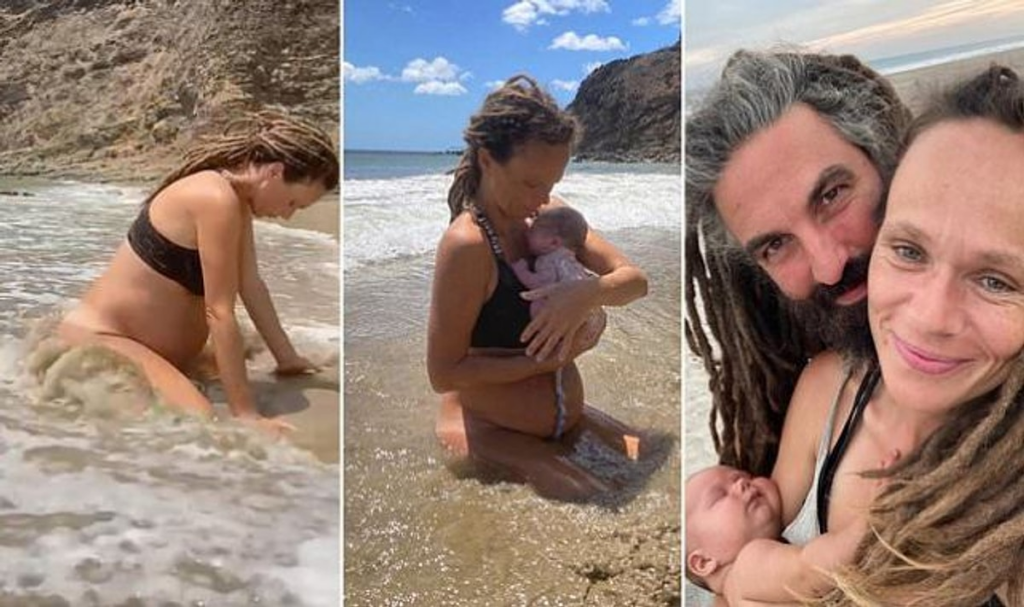
Most mothers give birth under fluorescent hospital lights, surrounded by doctors, monitors, and steady beeping machines. Josy Peukert’s experience was radically different. On February 27, 2022, the 37-year-old German mother walked into the Pacific Ocean and gave birth to her son in the waves.
Josy was at home in Nicaragua when her contractions began. Instead of heading to a hospital, she and her partner, 42-year-old Benni, calmly got into their car and drove to a quiet stretch of coastline known as Playa Majagual. For weeks, they had prepared for this moment, keeping a simple birth kit in the car towels, gauze, paper towels, and a small bowl fitted with a sieve to catch the placenta.
As the contractions intensified, Josy stepped into the warm, shallow water and knelt down in the surf. There were no medical staff, no machines, and no sense of urgency imposed by a clinical setting. Just the rhythm of the ocean, the open sky, and her partner nearby.
Later, Josy described the experience as deeply connected to nature. She said the waves seemed to rise and fall in sync with her contractions, and the soft sand beneath her knees made her feel grounded and supported. In her words, it felt like there was “nothing between heaven and earth, just life.”
There, in the rolling surf, she gave birth to a healthy baby boy. He was named Bodhi Amor Ocean Cornelius and weighed about 7 pounds, 6 ounces. The umbilical cord remained attached as Josy held him close, surrounded by seawater and silence.
After the birth, the family moved slowly and deliberately. They wrapped the newborn in towels, Josy rinsed herself in the ocean, and the three of them returned home. Instead of a recovery room, they lay together in their own bed, resting after the intense and intimate experience.
Josy later shared a video of the birth online, where it quickly spread across social media
.
Reactions were intense and divided. Many viewers called the moment beautiful, spiritual, and empowering a reminder of birth as a natural process rather than a medical event. Others were deeply concerned, describing the decision as reckless or dangerous and questioning the absence of medical supervision.
The video sparked widespread debate about childbirth choices, personal autonomy, and risk. Supporters praised Josy for trusting her body and rejecting fear, while critics emphasized the unpredictability of labor and the importance of medical care in emergencies.
Regardless of opinion, the story captured global attention because it challenged deeply ingrained ideas about where and how birth should happen. Josy Peukert’s ocean birth became more than a personal moment; it became a symbol, provoking conversations about nature, motherhood, and the fine line between empowerment and risk.
For Josy and her family, however, it was simply the moment their son entered the world carried in by the tide, welcomed by the sea.


Leave a Comment